


Chronic knee pain can deeply affect the quality of life for many seniors, often leaving them searching for effective relief options. It’s understandable to feel overwhelmed by the choices available. Among these, Genicular Artery Embolization (GAE) emerges as a minimally invasive procedure that shows promise for managing pain. However, the recovery process can bring about uncertainties and challenges.
What strategies can seniors adopt to ensure a smoother recovery and maximize pain relief after undergoing GAE? By exploring these options, you can take proactive steps towards a more comfortable and fulfilling life.
Are you or a loved one struggling with chronic knee pain? If so, you’re not alone. Many individuals, especially seniors, face this challenge, often feeling overwhelmed by discomfort and seeking GAE recovery pain relief instead of invasive treatments. Thankfully, there’s a gentle solution for GAE recovery pain relief: Genicular Artery Embolization (GAE).
GAE is a minimally invasive procedure designed to provide GAE recovery pain relief, particularly for those dealing with knee discomfort from osteoarthritis. By introducing small particles into the genicular arteries that supply blood to the knee, GAE effectively reduces blood flow to inflamed areas. This leads to less discomfort and inflammation, allowing you to feel more like yourself again.
This approach is especially beneficial for seniors, who often experience heightened sensitivity to pain and longer recovery times. Imagine being able to enjoy daily activities without the constant burden of knee pain. Recent studies have shown that GAE recovery pain relief can result in significant relief, with many individuals reporting a 50-70% reduction in pain levels within just weeks after the procedure.
What’s more, GAE is typically performed as a same-day outpatient procedure. This means you can return to your daily activities more quickly, regaining your mobility and independence. It’s a comforting thought, isn’t it?
If you’re looking for a way to improve your quality of life while avoiding the risks associated with more invasive surgeries, GAE might be the right choice for you. Remember, you don’t have to navigate this journey alone. Reach out for support and explore how GAE can help you reclaim your life.

[[[Recovering from Genicular Artery Embolization](https://drgolowa.com/post/recovering-from-genicular-artery-embolization-what-to-expect)](https://drgolowa.com/post/recovering-from-genicular-artery-embolization-what-to-expect)](https://drgolowa.com/post/recovering-from-genicular-artery-embolization-what-to-expect) (GAE) involves several important phases, and it’s natural to have questions about what to expect. Right after the procedure, you’ll be observed for a few hours, often allowing you to go home the same day. The first 24 to 48 hours are crucial; during this time, it’s best to focus on resting and using ice packs to manage any swelling. While mild discomfort is common, please don’t hesitate to reach out to your healthcare provider if you need [[[[[[GAE recovery pain relief](https://amavita.health/blog/10-female-heart-disease-symptoms-every-woman-should-recognize)](https://amavita.health/research)](https://amavita.health/blog/10-female-heart-disease-symptoms-every-woman-should-recognize)](https://amavita.health/research)](https://amavita.health/blog/10-female-heart-disease-symptoms-every-woman-should-recognize)](https://amavita.health/research) for significant pain.
By the end of the first week, many people find they can start engaging in light activities, like walking, while steering clear of any strenuous exercises. Typically, complete healing is expected within two weeks, with most individuals noticing [[[[[[significant GAE recovery pain relief](https://foxvein.com/recovery-timeline-after-gae)](https://amavita.health/heart)](https://foxvein.com/recovery-timeline-after-gae)](https://amavita.health/heart)](https://foxvein.com/recovery-timeline-after-gae)](https://amavita.health/heart) and improved mobility. In fact, studies show that patients who underwent GAE experienced at least a 61% decrease in discomfort one year post-procedure, indicating significant GAE recovery pain relief compared to before.
Regular follow-up appointments are essential to monitor your progress and address any potential complications, ensuring a smooth healing journey. As Dr. Yosef Golowa notes, 'GAE recovery pain relief has a high success rate for decreasing discomfort and enhancing function in individuals with osteoarthritis.' Engaging in light activities soon after the procedure is encouraged, as it promotes safe movement and can help protect your long-term health. Remember, you’re not alone in this process; support is always available.

Recovering from Genicular Artery Embolization (GAE) can be a challenging time, especially for seniors. It’s completely normal to feel discomfort during this healing process, but there are several strategies for [GAE recovery pain relief](https://unitedkneecenters.com/2025/02/19/recovery-tips-after-gae) that can help ease this journey.
It’s also important to be aware of potential side effects from GAE, such as mild swelling or bruising. These are generally manageable and part of the healing process. By consistently applying these strategies, you can greatly improve your healing experience and achieve better GAE recovery pain relief for long-term outcomes. Remember, you’re not alone in this journey; support is always available.

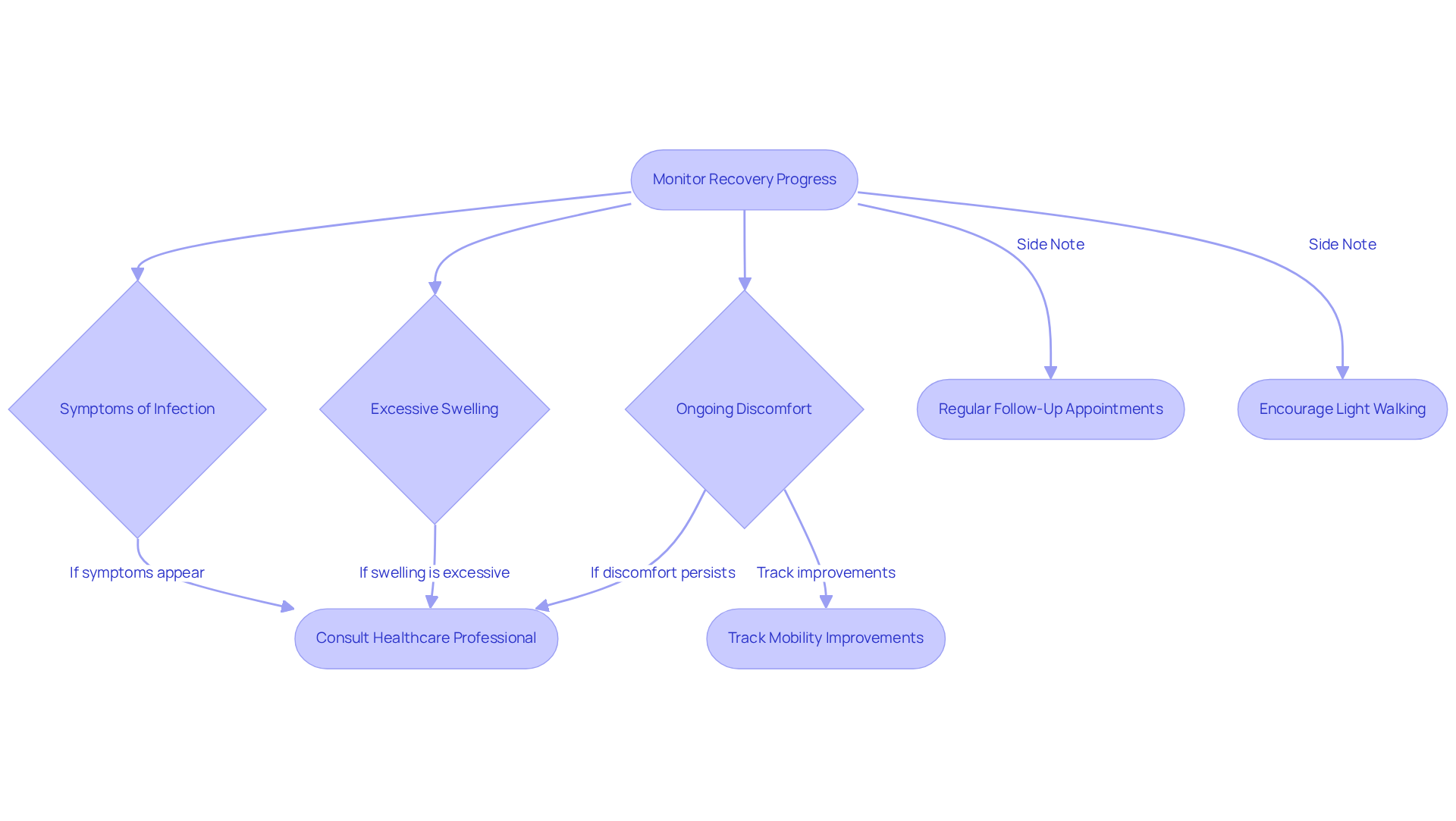
Monitoring recovery after Genicular Artery Embolization (GAE) is essential, especially for older individuals who may encounter unique challenges. Caregivers, it’s important to stay alert for signs of complications. Look out for:
In addition to this, keeping track of mobility improvements is crucial. If you or your loved one don’t notice a significant reduction in discomfort or improved mobility within two weeks, it’s wise to consult a healthcare professional. Studies show that most individuals experience GAE recovery pain relief along with a notable decrease in inflammation about two weeks after the procedure, with some reporting at least 61% less pain one year later. Regular follow-up appointments are vital for evaluating progress and addressing any concerns.
Caregivers should actively communicate any changes in the patient’s condition. This proactive approach can help reduce complications and support a smoother healing process. Furthermore, light walking is encouraged soon after the procedure to promote circulation, which can further aid recovery. Remember, you’re not alone in this journey; reaching out for support can make all the difference.
Exploring effective pain relief strategies for seniors recovering from Genicular Artery Embolization (GAE) opens up a hopeful path to easing chronic knee discomfort. This minimally invasive procedure not only significantly reduces pain but also enhances the overall quality of life for those facing the challenges of osteoarthritis. Understanding GAE and its potential can truly transform recovery experiences for seniors, and that’s what we want to highlight here.
Key strategies for managing pain during recovery include:
Each of these approaches plays a vital role in fostering healing, helping seniors regain their mobility and independence more swiftly. It’s also crucial to monitor recovery progress and recognize any complications, as this allows for timely intervention and support, enhancing the overall healing journey.
Ultimately, embracing these effective pain relief strategies can lead to a more comfortable recovery experience for seniors after GAE. By prioritizing proactive management and seeking support, individuals can significantly improve their outcomes, paving the way for a more active and fulfilling life. The journey toward pain relief and enhanced mobility begins with informed choices and a commitment to wellness. It’s essential for seniors and their caregivers to stay engaged and proactive in their recovery efforts, knowing that they are not alone in this journey.
What is Genicular Artery Embolization (GAE)?
GAE is a minimally invasive procedure designed to provide pain relief for individuals suffering from chronic knee discomfort, particularly due to osteoarthritis, by reducing blood flow to inflamed areas in the knee.
How does GAE work to relieve pain?
GAE works by introducing small particles into the genicular arteries that supply blood to the knee, effectively reducing blood flow to inflamed areas, which leads to less discomfort and inflammation.
Who can benefit from GAE?
GAE is especially beneficial for seniors who often experience heightened sensitivity to pain and longer recovery times, helping them manage chronic knee pain more effectively.
What kind of pain relief can patients expect after undergoing GAE?
Many individuals report a significant reduction in pain levels, with studies showing a 50-70% decrease in pain within just weeks after the procedure.
Is GAE an outpatient procedure?
Yes, GAE is typically performed as a same-day outpatient procedure, allowing patients to return to their daily activities more quickly.
What are the advantages of choosing GAE over invasive surgeries?
GAE offers a gentler solution with less risk compared to more invasive surgeries, improving quality of life while minimizing recovery time and complications.
How can individuals seeking GAE support?
Individuals are encouraged to reach out for support to explore how GAE can help them reclaim their life and improve their mobility and independence.