Introduction
Cardiac catheterization is a crucial procedure in heart health, providing essential insights and interventions for those dealing with heart conditions. Understanding this procedure can empower you to navigate your journey with confidence, ensuring you feel prepared for both the procedure and the recovery that follows. Yet, it’s natural to have questions about how long the procedure will take and what steps are involved, which can lead to feelings of anxiety and uncertainty.
How can you turn that apprehension into assurance as you approach cardiac catheterization? This article explores the key aspects of the procedure, from preparation to recovery, offering clarity and support for those facing this important intervention. Remember, you’re not alone in this journey, and we’re here to help you every step of the way.
Understand Cardiac Catheterization: Definition and Importance
, often called a cardiac cath, is a gentle yet vital procedure that helps diagnose and treat various . If you’ve been experiencing chest pain or discomfort, this technique could provide essential insights into your . During the process, a slender, flexible tube, or catheter, is carefully inserted into a blood vessel and guided to your heart. This allows healthcare providers to assess blood flow, measure pressures, and perform necessary interventions like .
You might wonder how this . Research indicates that can lead to a , highlighting its effectiveness in improving health outcomes. Furthermore, , making them even more beneficial for those at higher risk of heart disease.
At Amavita Heart and Vascular Health, our compassionate experts utilize state-of-the-art diagnostic imaging to identify blockages and offer . Most patients can return home the same day, often finding relief from symptoms within just a few days. We understand that facing can be daunting, but rest assured, we’re here to support you every step of the way. If you have any concerns or questions, please don’t hesitate to reach out. Your is our priority.

Prepare for the Procedure: Essential Steps and Considerations
Preparation for a is . Are you feeling a bit anxious about the process? You're not alone, and understanding what to expect can make a world of difference. Here are some important steps to follow:
- Consultation: It’s vital to have a thorough discussion with your healthcare provider about your , , and any allergies. This conversation helps identify potential risks and tailor the process to your needs. As Dr. Thomas S. Metkus, MD, wisely points out, " with your healthcare provider ensures that any potential risks are identified early."
- Fasting: Generally, patients are advised to avoid food or beverages after midnight before the procedure. This fasting period helps minimize the risk of complications during sedation, ensuring a safer experience.
- Medication Adjustments: Your doctor may suggest stopping or altering certain medications, especially blood thinners, to reduce bleeding risks during and after the procedure. While does carry a slightly higher risk than other heart tests, rest assured it is very safe when performed by an experienced team.
- : Since sedation will be used, it’s crucial to afterward. This ensures your safety and comfort as you recover from the effects of sedation. Remember, having someone ready to take you home can make the experience much easier.
- Comfort Preparations: Wear loose, comfortable clothing and remove any jewelry or accessories that might interfere with the procedure. This simple step helps create a more relaxed environment for both you and the medical team.
By following these guidelines, you can significantly , paving the way for effective diagnosis and treatment. may vary based on the insertion site; for groin insertions, bed rest may last 4 to 6 hours, while wrist insertions typically require only 1 to 2 hours. Remember, you’re not alone in this journey, and your healthcare team is here to support you every step of the way.

Experience the Procedure: What Happens During Cardiac Catheterization
When it comes to , understanding the process can help ease any worries you might have. Here’s a gentle overview of what to expect during this important procedure:
- Arrival and Preparation: Upon arriving at the hospital, you’ll change into a hospital gown and have an IV line placed for medication and fluids. This is a standard step to ensure you’re comfortable and ready.
- Sedation: A mild sedative is often given to help you relax. Don’t worry; you’ll remain awake throughout the procedure, allowing you to feel more in control.
- Catheter Insertion: The doctor will clean the insertion site, usually in the groin or wrist, and numb the area with a local anesthetic. Then, the catheter is gently inserted into the blood vessel and guided to the heart using fluoroscopy, which provides live X-ray imaging.
- Diagnostic Imaging: Once the catheter is in place, contrast dye is injected to visualize the heart's arteries and chambers. This step is crucial for and identifying any blockages or abnormalities. At Amavita, we use , featuring a portable, FDA-cleared ultrasound for bedside . This ensures accurate imaging and helps detect cardiac issues early, significantly improving patient outcomes and reducing hospital readmissions.
- Intervention (if needed): If any blockages are found, the doctor may perform further actions, such as , to restore proper blood flow.
- Completion: After the procedure, the catheter is removed, and pressure is applied to the insertion site to prevent bleeding.
When considering how long is a , it typically lasts about 30 minutes to an hour, but preparation and recovery may take a bit longer. Thanks to recent advancements in , many individuals can return home the same day, following proper post-procedure instructions. Facilities like the newly opened Igo Family and Electrophysiology Lab are enhancing access to these vital services, reflecting a commitment to high-quality cardiovascular care.
It’s important to remember that is generally safe, with serious complications being rare. In Florida, the is approximately 136 per 100,000 people, and in Polk County, it’s about 149 per 100,000 people. This underscores the . If you have any concerns or questions, please don’t hesitate to reach out for support. We’re here to help you every step of the way.

Recover After the Procedure: Post-Catheterization Care and Expectations
After , you might be wondering what to expect during your recovery. Here’s a gentle guide to help you through the process:
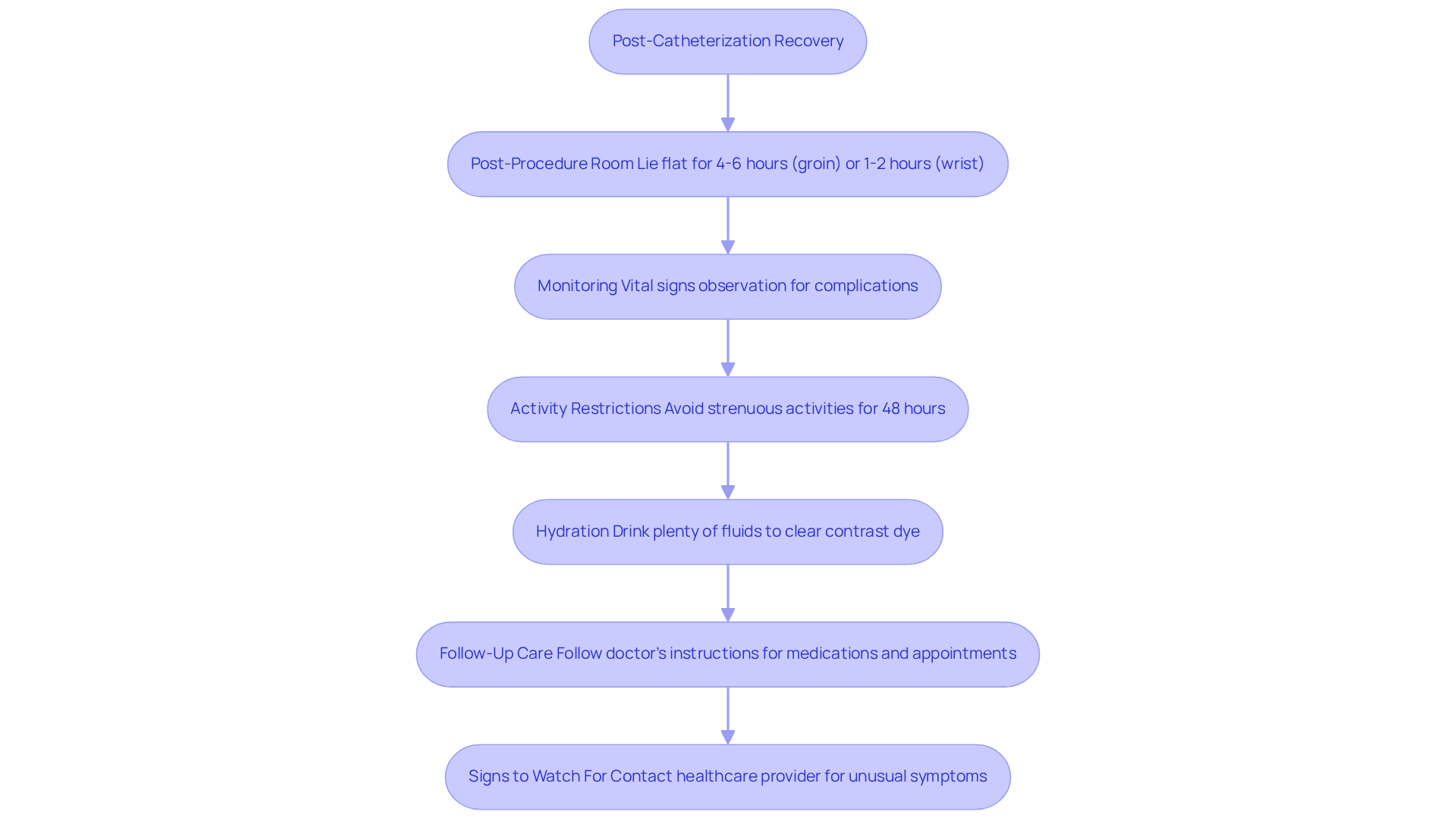
- Post-Procedure Room: After your procedure, you’ll be moved to a . Here, you’ll lie flat for several hours-typically 4 to 6 hours for groin insertions and 1 to 2 hours for wrist insertions. This helps promote healing at the catheter insertion site.
- Monitoring: During this time, healthcare staff will closely observe your vital signs and watch for any complications, like bleeding or infection. Your safety is our top priority as you heal.
- : It’s important to avoid strenuous activities for at least 48 hours. to enhance circulation and assist in your recovery. Most patients find that after learning how long is a heart cath procedure, they can return to normal activities within 24 to 72 hours.
- : Drinking plenty of fluids is vital. It helps clear the contrast dye from your system and supports your overall health.
- : Your doctor will provide specific instructions regarding medications, activity levels, and follow-up appointments. Following these guidelines is essential for a smooth healing process. If additional interventions were performed during your procedure, you might need to stay overnight.
- Signs to Watch For: Please be vigilant for any , such as , severe pain, or at the insertion site. If you notice any of these, don’t hesitate to contact your healthcare provider right away.
Dr. Cindy L. Grines emphasizes that recovery times can vary depending on the access point used. For instance, accessing the radial artery often allows for compared to the femoral artery. By following these post-procedure care instructions, you can facilitate a quicker and more effective recovery. Most individuals find they can return to their normal activities within a week, and we’re here to support you every step of the way.
Conclusion
Cardiac catheterization is an important procedure that plays a vital role in diagnosing and treating heart conditions. Understanding its significance can help you approach the experience with greater confidence and clarity. This tutorial has shared valuable insights into what cardiac catheterization involves, from preparation to the procedure itself and recovery expectations.
Have you thought about what to expect during this process? Key points covered include essential steps for preparing for a heart cath, such as:
- Consulting with your healthcare provider
- Fasting
- Arranging transportation
We also detailed the procedure's progression, emphasizing the safety and efficiency of modern techniques. After the procedure, care is crucial; monitoring, hydration, and following medical advice are important for a smooth recovery.
Ultimately, cardiac catheterization offers significant benefits, including improved heart health and reduced risks of serious events. If you're experiencing heart-related symptoms, consider this procedure as a proactive step towards maintaining your cardiovascular health. By staying informed and engaged in the process, you can ensure you receive the best possible care and support throughout your journey. Remember, you’re not alone in this; we’re here to help you every step of the way.
Frequently Asked Questions
What is cardiac catheterization?
Cardiac catheterization, often referred to as a cardiac cath, is a procedure used to diagnose and treat various heart conditions by inserting a slender, flexible tube into a blood vessel and guiding it to the heart.
Why is cardiac catheterization important?
It helps assess blood flow, measure pressures, and perform interventions like angioplasty or stenting, which can provide essential insights into heart health, especially for individuals experiencing chest pain or discomfort.
How does cardiac catheterization benefit older adults?
Research shows that cardiac catheterization can lead to a 25% reduction in the risk of non-fatal heart events for older adults, indicating its effectiveness in improving health outcomes.
What advancements have been made in cardiac catheterization technology?
Advancements in technology have enhanced the safety and precision of cardiac catheterization procedures, making them more beneficial for patients at higher risk of heart disease.
What can patients expect after undergoing cardiac catheterization?
Most patients can return home the same day after the procedure, and many find relief from symptoms within just a few days.
What support does Amavita Heart and Vascular Health offer for patients?
Amavita Heart and Vascular Health provides compassionate care with state-of-the-art diagnostic imaging to identify blockages and offer minimally invasive treatments, ensuring patients receive support throughout their heart health journey.
List of Sources
- Understand Cardiac Catheterization: Definition and Importance
- Cardiac Catheterization: New Amazing Tech - Liv Hospital (https://int.livhospital.com/cardiac-catheterization-new-amazing-tech)
- interventional cardiologist and a new cardiac catherization lab (https://missouridelta.com/news/interventional-cardiologist-and-a-new-cardiac-catherization-lab)
- New research shows invasive treatment could reduce heart attacks in older patients - Newcastle Hospitals NHS Foundation Trust (https://newcastle-hospitals.nhs.uk/news/new-research-shows-invasive-treatment-could-reduce-heart-attacks-in-older-patients)
- Mount Sinai Launches Cardiac Catheterization Artificial Intelligence Research Lab (https://mountsinai.org/about/newsroom/2025/mount-sinai-launches-cardiac-catheterization-artificial-intelligence-research-lab)
- Cardiac Catheterization and Outcomes for Elderly Patients Hospitalized With Heart Failure - PMC (https://pmc.ncbi.nlm.nih.gov/articles/PMC10798072)
- Prepare for the Procedure: Essential Steps and Considerations
- Cardiac Catheterization - UF Health (https://ufhealth.org/conditions-and-treatments/cardiac-catheterization)
- Cardiac Catheterization (https://massgeneral.org/heart-center/treatments-and-services/cardiac-catheterization)
- Cardiac Catheterization: Before Your Procedure | NYP (https://nyp.org/healthlibrary/multimedia/cardiac-catheterization-before-your-procedure)
- Cardiac Catheterization: How Minimally Invasive Procedures Are Transforming Heart Care (https://health.stonybrookmedicine.edu/cardiac-catheterization-how-minimally-invasive-procedures-are-transforming-heart-care)
- Experience the Procedure: What Happens During Cardiac Catheterization
- WATCH: Viera hospital officially opens cardiac catheterization and electrophysiology lab. | Health First (https://hf.org/news/watch-viera-hospital-officially-opens-cardiac-catheterization-and-electrophysiology-lab)
- Third phase of expansion begins at Rogue Regional Medical Center: New cardiac catheterization lab and recovery areas underway - Asante Foundation (https://asantefoundation.org/cardiac-groundbreaking-at-rogue-regional-medical-center)
- Newly renovated state-of-the-art Cardiac Cath Lab unveiled at AdventHealth Heart of Florida (https://adventhealth.com/news/newly-renovated-state-art-cardiac-cath-lab-unveiled-adventhealth-heart-florida)
- How long does a diagnostic cardiac cath take? (https://nghs.com/2025/04/30/how-long-does-a-diagnostic-cardiac-cath-take)
- State panel recommends offering some heart procedures outside of hospitals (https://crainsnewyork.com/health-pulse/new-york-moves-toward-allowing-cardiac-catheterizations-outside-hospitals)
- Recover After the Procedure: Post-Catheterization Care and Expectations
- After Your Cardiac Catheterization | Cleveland Clinic (https://my.clevelandclinic.org/departments/heart/patient-education/recovery-care/interventional-procedures/after-your-cardiac-catheterization)
- How Long Should I Rest After A Cardiac Catheterization? (https://abcnews.com/Health/HeartDiseaseLivingWith/story?id=4218581)
- yalemedicine.org (https://yalemedicine.org/news/new-advances-in-cardiac-surgery-improve-recovery-survival)
- Cardiac Catheterization: How Minimally Invasive Procedures Are Transforming Heart Care (https://health.stonybrookmedicine.edu/cardiac-catheterization-how-minimally-invasive-procedures-are-transforming-heart-care)
- New heart valve procedures speed recovery (https://fox13now.com/wellness-wednesday/new-heart-valve-procedures-speed-recovery)


