


Concerns about radiation exposure can feel overwhelming when patients are faced with a nuclear stress test, a vital procedure for assessing heart health. This diagnostic tool uses a radiotracer to visualize blood flow to the heart, raising important questions about the safety of radiation levels and potential health risks. As millions undergo this test each year, it’s essential to understand the balance between its diagnostic benefits and the associated radiation exposure.
What are the real risks? How do they compare to the potential life-saving insights these tests provide? These questions are natural, and it’s okay to feel anxious about them. Remember, you’re not alone in this journey. Many patients share similar concerns, and it’s important to address them with care and understanding.
In addition to this, healthcare professionals are dedicated to ensuring your safety. They carefully evaluate the necessity of the test and the radiation involved, striving to provide the best care possible. Your health and peace of mind are their top priorities.
If you have any worries or need more information, don’t hesitate to reach out. Seeking support is a strong step towards understanding your health better.
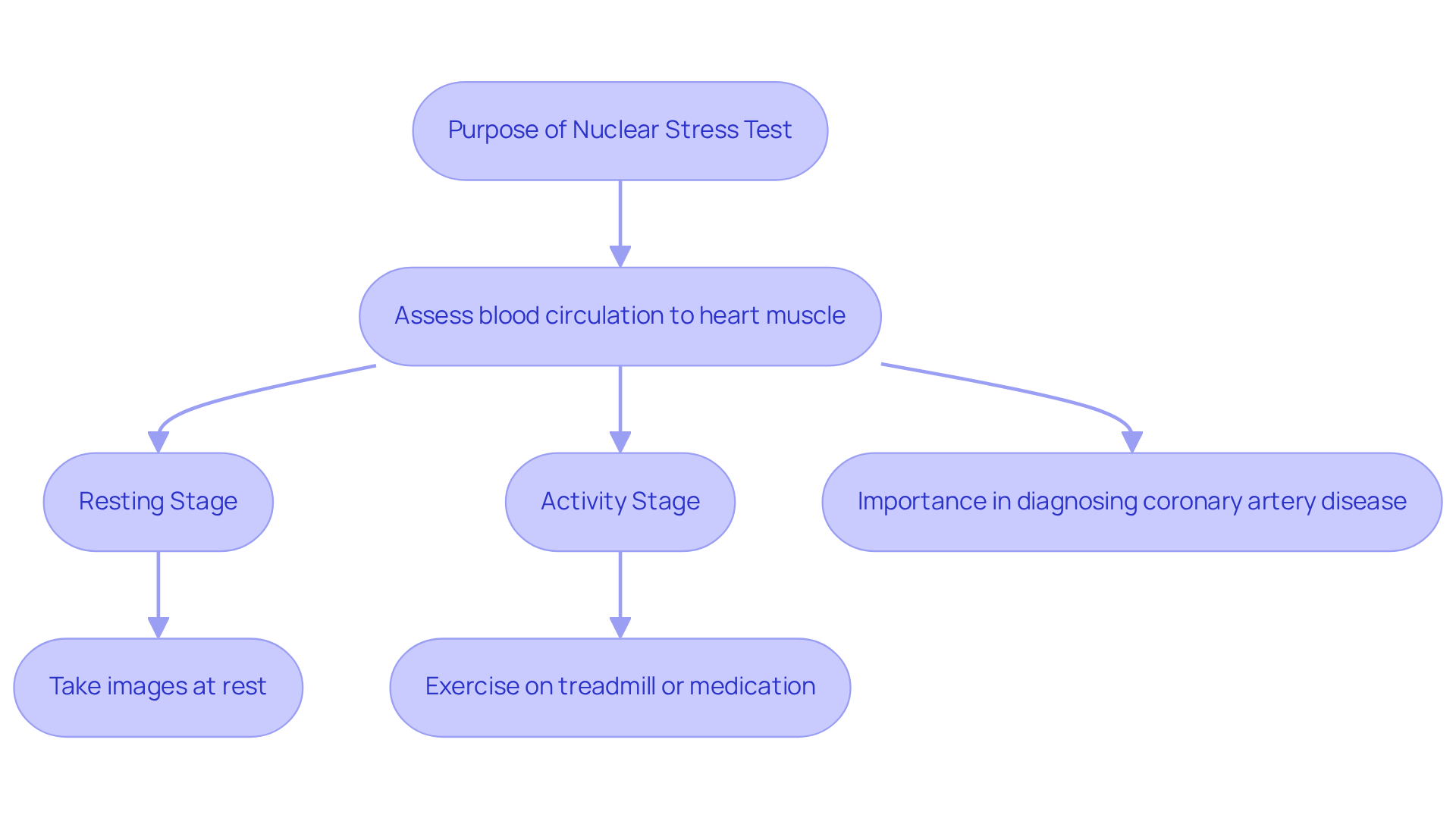
A nuclear stress examination is a vital diagnostic imaging procedure designed to assess blood circulation to your heart muscle, both at rest and during physical activity. This procedure involves a small injection of a radioactive material, known as a radiotracer, into your bloodstream, which leads to concerns about whether radiation from a nuclear stress test is harmful. As the radiotracer emits gamma rays, a specialized camera captures these signals to create detailed images of your heart, which leads to concerns about whether radiation from a nuclear stress test is harmful. The primary goal of this evaluation is to identify areas of your heart that may not be receiving enough blood, which can often indicate coronary artery disease (CAD) or other cardiovascular issues.
Typically, the procedure unfolds in two stages:
This two-phase approach allows healthcare providers to compare blood flow in your heart under different conditions, providing crucial insights into your cardiac health.
In the United States, around 8 million nuclear evaluations are performed each year, underscoring their importance in diagnosing cardiovascular disease. Each of the 34,098 active cardiologists conducts an average of 700 examinations annually, reflecting the proactive role these specialists play in the early detection and management of heart conditions. As heart disease remains the leading cause of death in the U.S., the demand for nuclear evaluations is increasing, particularly among older adults.
Real-life examples highlight the effectiveness of nuclear evaluations in clinical settings. For instance, individuals experiencing symptoms like chest discomfort or shortness of breath are often referred for this examination to check for coronary artery disease and assess the severity of their condition. The results help healthcare teams develop effective treatment plans and monitor the success of ongoing therapies.
If you or a loved one are facing concerns about heart health, remember that seeking help is a positive step. Your healthcare team is here to support you every step of the way, ensuring you receive the care and attention you deserve.
At Amavita, we understand that the thought of undergoing a nuclear stress evaluation can be concerning. During this procedure, patients receive a radiation dose similar to that of several chest X-rays, leading to concerns about whether radiation from a nuclear stress test is harmful, typically around 11 millisieverts. While this exposure is about three times the annual dose from normal daily life, the question of whether radiation from a nuclear stress test is harmful is generally considered safe. However, we believe it’s important to understand whether radiation from a nuclear stress test is harmful.
You might wonder about the side effects from the radiotracer used in the evaluation. Most commonly, patients may experience mild allergic reactions or slight discomfort at the injection site. Severe complications are rare, occurring in only 1 out of every 10,000 procedures, and life-threatening issues are comparably uncommon. To ensure your safety, our healthcare providers at Amavita adhere to strict protocols, administering the lowest effective dose of radiotracer and performing the procedure only when clinically necessary.
We also recommend that patients take specific precautions after the test, such as:
With Dr. Martinez-Clark’s Harvard education and extensive expertise in cardiovascular care, we are confident that the benefits of accurately identifying cardiac conditions far outweigh the minor risks associated with radiation exposure. Nuclear evaluations are an essential resource in our comprehensive cardiovascular care, and we are here to support you every step of the way. If you have any questions or concerns, please don’t hesitate to reach out. Your health and comfort are our top priorities.

Nuclear stress evaluations play a vital role in diagnosing and managing cardiovascular conditions, especially coronary artery disease (CAD). These tests provide essential insights into how blood circulates and functions within the heart, helping doctors identify blockages or ischemic areas that might not be visible through standard diagnostic methods. They are particularly beneficial for individuals experiencing unusual symptoms or those at higher risk for cardiovascular issues, as they can uncover problems before they escalate into serious complications like cardiac arrests. With the integration of Amavita's CardioElite™ program, this process is further enhanced, offering advanced diagnostic capabilities and real-time data to ensure that high-risk individuals receive timely and effective interventions.
The procedure involves capturing images of the heart both at rest and during exertion, allowing for a comprehensive evaluation of blood flow. This dual imaging approach is crucial in identifying reduced blood flow and assessing the severity of existing blockages. In fact, nearly half of those who have suffered heart attacks reported experiencing symptoms while engaging in physical activity in the months leading up to their event. This highlights the importance of testing for early detection.
Moreover, the results from nuclear evaluations significantly influence treatment decisions. They can indicate the need for further testing, lifestyle adjustments, or even surgical interventions. For instance, a case study illustrated how analyzing nuclear evaluation images helped recognize blood circulation patterns that guided subsequent treatment strategies, ultimately improving outcomes for patients.
With over 60 years of experience, nuclear examinations have proven to be a reliable diagnostic tool, assisting countless individuals each year. Their non-invasive nature and ability to provide detailed insights into cardiac health make them a cornerstone of personalized patient care. This is especially true through the CardioElite™ program, which ensures that individuals, particularly those at high risk, receive tailored interventions that enhance their quality of life and reduce the likelihood of readmissions.

Recent advancements in nuclear pressure testing technology are truly remarkable, focusing on enhancing diagnostic accuracy while also reducing radiation exposure. Have you ever felt anxious about whether radiation from a nuclear stress test is harmful? Techniques like single-photon emission computed tomography (SPECT) and positron emission tomography (PET) are leading the way, providing precise assessments of myocardial perfusion that can help ease those worries.
In addition to this, other testing methods such as echocardiography under pressure and cardiac MRI are becoming increasingly popular. These options don’t involve radiation and can offer essential insights into heart function. For patients who are understandably cautious about whether radiation from a nuclear stress test is harmful, these alternatives are particularly appealing. It’s comforting to know that there are safe and effective ways to monitor heart health.
Current trends also show a promising shift towards integrating artificial intelligence and machine learning in cardiac imaging. This evolution is expected to further enhance the accuracy and efficiency of nuclear stress tests, making them even more reliable. As we move forward, it’s important to remember that these advancements are paving the way for safer, more effective diagnostic options in cardiovascular care.
If you have concerns about your heart health, don’t hesitate to reach out for support. Your well-being is our priority, and we’re here to help you navigate these options with care and understanding.

Nuclear stress tests play a vital role in diagnosing cardiovascular conditions, offering important insights into heart health by assessing blood flow. While it's natural to have concerns about radiation exposure, rest assured that this procedure is generally safe and conducted under strict protocols to minimize any risks. It's crucial to understand the balance between the benefits of accurate diagnosis and the potential hazards of radiation as you navigate your heart health.
Throughout this discussion, we emphasize the significance of nuclear stress evaluations in identifying coronary artery disease and guiding treatment decisions. The dual-phase approach of the procedure allows healthcare providers to capture detailed images of heart function, revealing essential information that can help prevent serious complications. With advancements in technology and alternative testing methods, patient safety and diagnostic accuracy continue to improve, ensuring you receive the best care possible.
Ultimately, being aware of these advancements and the importance of nuclear stress tests can empower you to make informed decisions about your heart health. Engaging in open conversations with your healthcare providers can ease concerns and lead to timely interventions that enhance outcomes. By prioritizing your heart health through proactive measures, including nuclear evaluations when necessary, you can significantly improve your quality of life and reduce the risk of severe cardiovascular events.
What is a nuclear stress test?
A nuclear stress test is a diagnostic imaging procedure designed to assess blood circulation to the heart muscle at rest and during physical activity, using a small injection of a radioactive material called a radiotracer.
What is the purpose of a nuclear stress test?
The primary goal of a nuclear stress test is to identify areas of the heart that may not be receiving enough blood, which can indicate conditions such as coronary artery disease (CAD) or other cardiovascular issues.
How is a nuclear stress test performed?
The procedure unfolds in two stages: the resting stage, where images are taken while the patient is at rest, and the activity stage, where the patient either exercises on a treadmill or receives medication that simulates exercise.
Why is the two-phase approach important in a nuclear stress test?
The two-phase approach allows healthcare providers to compare blood flow in the heart under different conditions, providing crucial insights into cardiac health.
How common are nuclear stress tests in the United States?
Approximately 8 million nuclear evaluations are performed each year in the United States, highlighting their importance in diagnosing cardiovascular disease.
Who typically performs nuclear stress tests?
Nuclear stress tests are conducted by cardiologists, with each of the 34,098 active cardiologists performing an average of 700 examinations annually.
What types of symptoms might lead someone to receive a nuclear stress test?
Individuals experiencing symptoms such as chest discomfort or shortness of breath are often referred for this examination to check for coronary artery disease and assess the severity of their condition.
How do the results of a nuclear stress test help healthcare teams?
The results help healthcare teams develop effective treatment plans and monitor the success of ongoing therapies for patients with heart conditions.
What should someone do if they have concerns about their heart health?
If you or a loved one have concerns about heart health, seeking help from a healthcare team is a positive step, as they provide support and care throughout the process.