


Understanding the nuances of tempo runs can truly enhance a runner's training experience, boosting both speed and endurance. By learning to maintain an optimal heart rate during these workouts, athletes can see remarkable improvements in their performance and overall fitness. Yet, it’s common to encounter challenges in sustaining the necessary intensity. Have you ever wondered what effective strategies can help you overcome these hurdles?
Many runners face similar concerns, and it’s perfectly okay to seek guidance. The journey of mastering tempo runs doesn’t have to be daunting. In addition to this, there are key steps you can take to navigate these challenges successfully. Let’s explore how you can make the most of your tempo running while feeling supported every step of the way.
Tempo exercises are a wonderful way to enhance both speed and endurance, and they can be a great addition to your training routine. Typically, these exercises are performed at a 'comfortably hard' pace-faster than your easy jog but sustainable for longer durations. You might find yourself sustaining this effort for 20 to 40 minutes, often reaching 80-90% of your tempo run heart rate. This level of intensity is crucial for elevating your lactate threshold, which helps you maintain faster paces over extended periods without feeling overly fatigued.
To effectively incorporate tempo runs into your training, consider these key elements:
Research shows that athletes who incorporate speed workouts into their training often experience notable improvements in endurance and race performance. For instance, a 2021 study found that interval runs were the most significant predictor of enhanced athletic performance, surpassing the benefits of easy runs and total training mileage. Coaches emphasize that these workouts not only improve lactate clearance but also help runners develop pacing control and confidence in their fitness levels. As running coach Jes Woods wisely notes, 'Enhancing your pace or lactate threshold is akin to improving your miles per gallon on your vehicle.'
Before you begin your speed work, it’s essential to warm up for 10 to 15 minutes at a conversational pace to prevent injury. Including pace workouts in your regimen can lead to significant improvements in both velocity and stamina, which can be especially beneficial for older individuals looking to maintain their fitness. Remember, you’re not alone in this journey; support is always available, and taking these steps can truly enhance your running experience.

Calculating your optimal heart rate for a tempo run can feel a bit daunting, but it’s a vital step towards enhancing your training and overall well-being. Let’s break it down together, step by step.
Determine Your Maximum Heart Rate (MHR): A common method is to subtract your age from 220. For example, if you’re 30 years old, your MHR would be 190 beats per minute (bpm). Knowing this number is the first step in understanding your heart's capabilities.
Determine Your Target Heart Rate Zone: For effective pace workouts, aim for 80-90% of your MHR. Using our earlier example:
Utilize a Pulse Monitor: To help you stay within this range during your runs, consider using a pulse monitor or fitness tracker. Wrist-worn monitors can be quite accurate at lower intensities, though they may be less reliable above 150 bpm. This technology can assist you in adjusting your pace as needed, which is crucial for effective endurance training. Research shows that tracking your pulse can significantly enhance workout effectiveness, especially for seniors, allowing for safe and efficient exercise. As Dr. Tamanna K. Singh, a sports cardiologist, wisely states, "Heart rate training allows you to monitor your effort, to keep the easy days easy, the hard days hard, and the tempo sessions in the right ‘effort.’"
Understanding your target heart rate zone is essential for optimizing your training. Fitness experts agree that maintaining the right intensity not only boosts performance but also aids in recovery, ensuring your workouts are both productive and safe. Remember, it’s important to gradually work up to exercising at 85% of your peak pulse to ensure safe training methods.
If you have any concerns or questions about your heart rate training, don’t hesitate to reach out for support. You’re not alone on this journey, and there are resources available to help you every step of the way.

To maintain your target heart rate during tempo runs, it’s important to consider a few gentle strategies that can really help you feel your best:
Warm-Up Properly: Start with a 10-15 minute warm-up at an easy pace. This prepares your body for the increased intensity ahead. It’s a crucial step that not only helps prevent injuries but also enhances your overall performance.
Observe Your Pulse: Using a pulse monitor can be a great way to track your beats per minute (bpm) throughout your run. If you notice your tempo run heart rate dipping below your target zone, try to slightly increase your pace to stay within that optimal range. You might also find the 'talk test' helpful - if you can chat comfortably while running, you’re likely at the right intensity.
Pace Yourself: It’s wise to start at the lower end of your target pulse zone and gradually pick up speed. This approach can help you avoid early fatigue, enabling you to maintain your tempo run heart rate longer and improve your performance.
Stay Hydrated: Hydration is especially important, particularly for senior athletes. Dehydration can significantly impact your pulse and performance. Research shows that older adults may not feel thirsty as often, so it’s essential to manage your fluid intake proactively. Aim to drink 14 to 22 ounces of fluids a couple of hours before your run, and keep hydrating during your activity. As Andy Blow suggests, increasing your sodium intake can also help retain water and ease cardiovascular strain.
Cool Down: After your pace run, take a moment to cool down with a slow jog or walk for about 10 minutes. This gradual transition helps your heart rate return to normal and aids in recovery, ensuring you feel better after your exercise.
Remember, taking these steps not only supports your physical health but also nurtures your overall well-being. You’re doing great, and every effort counts!

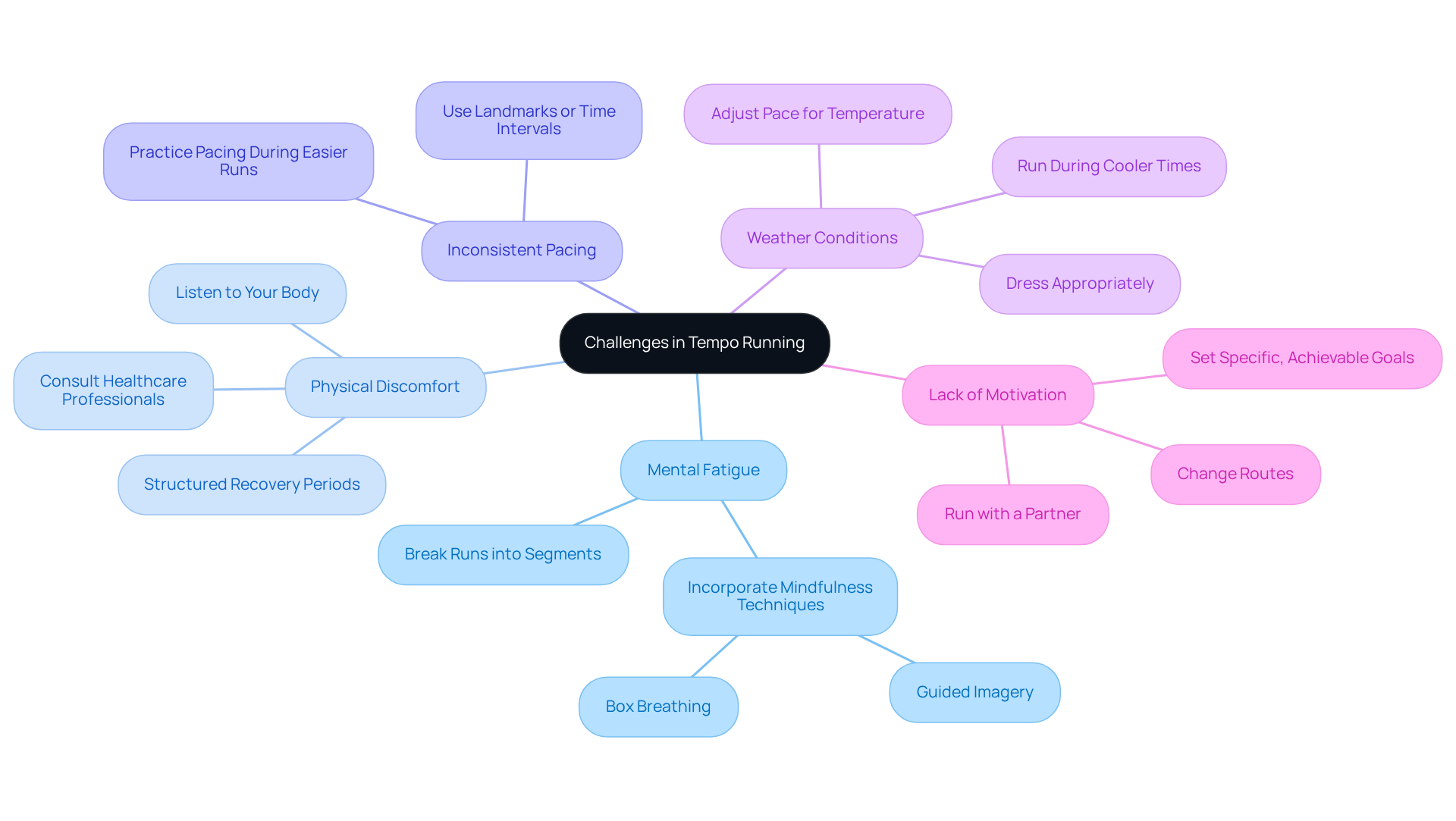
Many athletes encounter hurdles when trying to incorporate workouts that focus on tempo run heart rate into their training routines. Let’s explore some common challenges and effective strategies to help you overcome them:
Mental Fatigue: Tempo exercises can be quite taxing on the mind. To ease this burden, try breaking your run into smaller, manageable segments. Focus on reaching the halfway point before thinking about the finish line. This shift in perspective can make a big difference. Additionally, incorporating mindfulness techniques, like guided imagery or box breathing, can help maintain mental clarity and reduce anxiety during these workouts.
Physical Discomfort: It’s not unusual to feel discomfort during pacing sessions. However, it’s crucial to listen to your body. If you experience pain, don’t hesitate to adjust your pace or take a break. If discomfort continues, consulting a healthcare professional is wise. Research shows that older athletes can benefit from tailored strategies to manage physical discomfort, enhancing their overall running experience. For example, structured recovery periods can significantly alleviate mental fatigue and boost performance.
Inconsistent Pacing: Many runners struggle to maintain a steady pace. To improve this, practice pacing during your easier runs to develop a better sense of speed. Using landmarks or time intervals can help you gauge your speed during sustained efforts, promoting a more consistent performance.
Weather Conditions: Extreme temperatures can impact your performance. Dress appropriately for the weather and adjust your pace as needed. If it’s particularly hot, consider running in the early morning or late evening to avoid heat-related issues.
Lack of Motivation: If the tempo run heart rate feels overwhelming, try changing your routes or running with a partner to make the experience more enjoyable. Setting specific, achievable goals can also help maintain motivation and enhance your overall training experience. As sports psychologists often remind us, keeping a positive mindset and focusing on small, incremental progress can greatly improve your running performance.
Mastering your tempo run heart rate is crucial for anyone looking to boost their performance and endurance. Understanding the basics of tempo runs, calculating your ideal heart rate, and applying effective strategies can truly transform your training experience. This guide offers a thoughtful approach to integrating tempo runs into your routine, helping you push your limits while keeping a sustainable pace.
Key insights from this guide emphasize the significance of:
By focusing on these elements, you can optimize your workouts, build mental strength, and ultimately reach your fitness goals.
As you embark on your journey to master tempo runs, remember that every step you take towards understanding your heart rate and pacing strategies is a step towards your success. Embrace the challenges ahead, stay dedicated to your training, and utilize the resources available to enhance your running experience. The path to improved performance is within your grasp, and with commitment and the right approach, achieving your running dreams is absolutely possible.
What are tempo runs?
Tempo runs are exercises performed at a "comfortably hard" pace, faster than an easy jog but sustainable for longer durations, typically lasting 20 to 40 minutes. They aim to elevate your lactate threshold, allowing you to maintain faster paces without excessive fatigue.
How long should a tempo run last?
A tempo run should last between 20 to 40 minutes. Beginners can start with a 20-minute tempo run to ease into this training method.
What pace should I aim for during a tempo run?
You should strive for a challenging yet manageable speed that you could maintain for about an hour during a race.
What is the purpose of incorporating tempo runs into my training?
Tempo runs boost cardiovascular fitness, enhance speed, build mental resilience, and improve your tempo run heart rate. They are essential for improving your VO2 max and enabling you to run faster for longer periods.
What benefits do athletes gain from tempo runs?
Athletes who include tempo runs in their training often see significant improvements in endurance and race performance. Research indicates that speed workouts, like tempo runs, are more beneficial than easy runs or total training mileage.
How do tempo runs affect lactate clearance?
Tempo runs improve lactate clearance, which helps runners maintain faster paces and develop better pacing control and confidence in their fitness levels.
What should I do before starting tempo runs?
It is essential to warm up for 10 to 15 minutes at a conversational pace before beginning tempo runs to prevent injury.
Who can benefit from tempo runs?
Tempo runs can be beneficial for all runners, including older individuals looking to maintain their fitness, as they can lead to significant improvements in both velocity and stamina.