Introduction
Navigating the world of cardiology testing can feel overwhelming, but understanding its importance is essential for your heart health. These tests, from simple EKGs to advanced imaging techniques, are crucial for diagnosing conditions and monitoring how your heart is functioning. Yet, it’s common for patients to feel uncertain about what to expect and how to interpret their results.
How can you prepare for these assessments and feel empowered to take charge of your cardiovascular health? By taking a proactive approach, you can ensure that you’re ready for your tests and understand the next steps in your care. Remember, you’re not alone in this journey; support is available to help you every step of the way.
Explore the Basics of Cardiology Testing
A encompasses a variety of diagnostic procedures designed to assess and identify potential issues. These evaluations range from simple blood pressure checks to , like those provided by Amavita's . Understanding these basics helps patients appreciate the significance of s in maintaining .
Why Testing Matters: The is crucial in , monitoring ongoing conditions, and evaluating treatment effectiveness. At Amavita Cardiovascular Health®, our aim to significantly reduce the risk of heart attacks through personalized strategies tailored just for you.
Exploring Test Types: Tests can be either non-invasive, such as EKGs and echocardiograms, or invasive, like cardiac catheterization. With CardioElite™, we can perform right at your bedside, delivering results in minutes. This allows for immediate insights into your heart's structure and function, ensuring you receive timely care.
Your Experience Matters: Knowing what to expect can ease anxiety and encourage you to take an active role in your health journey. We focus on and same-day recovery options, ensuring that your fits seamlessly into your life, not just your medical needs. Remember, you’re not alone in this; we’re here to support you every step of the way.

Identify Common Cardiology Tests and Their Functions
Taking care of your heart is essential, and several common cardiology tests can assist in assessing your heart health. Each cardiology test serves a unique purpose in diagnosis and monitoring, offering valuable insights into your cardiovascular well-being.
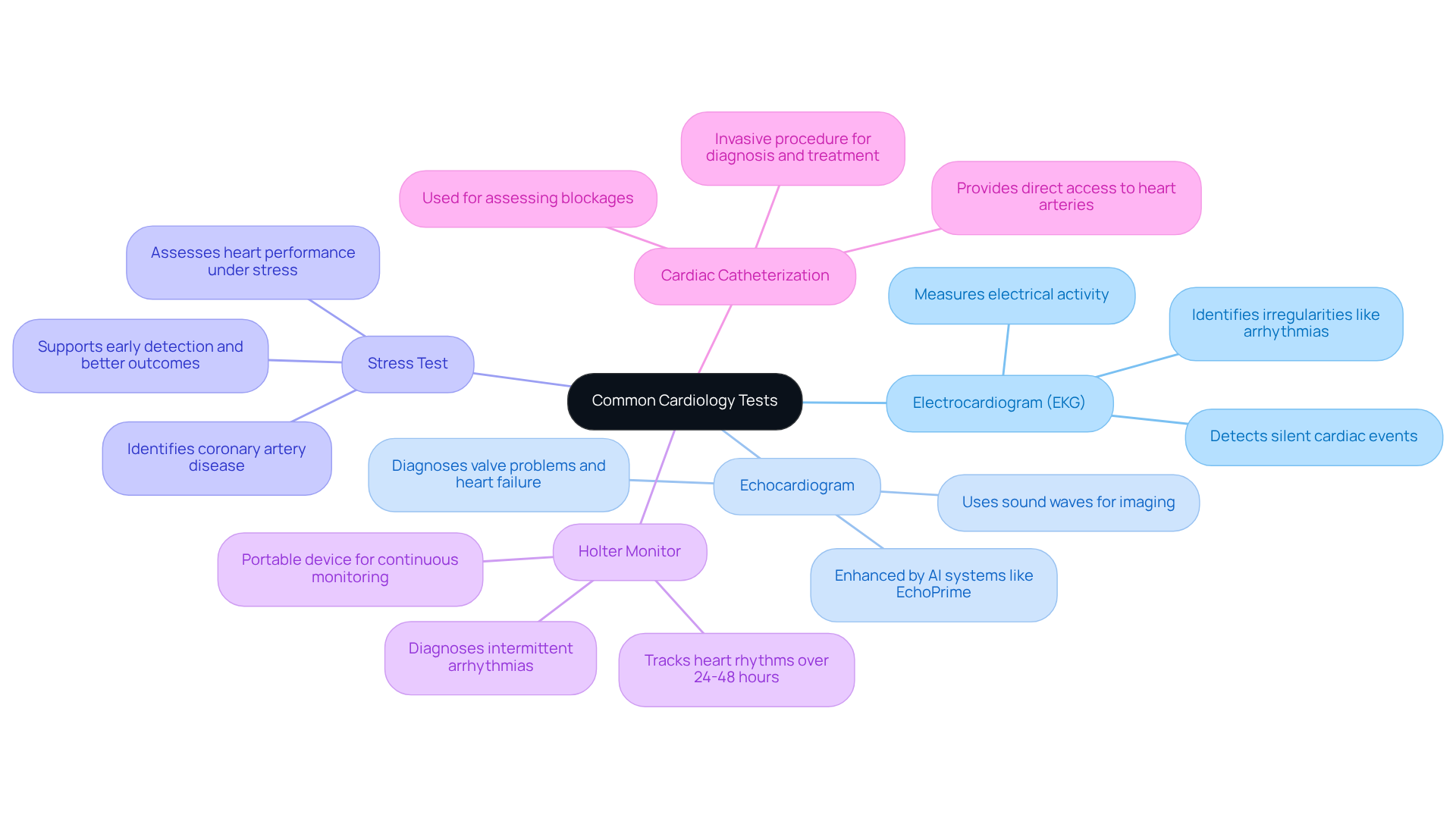
- Electrocardiogram (EKG): This test measures the electrical activity of your heart, helping healthcare providers identify irregularities like arrhythmias. EKGs are known for their accuracy, with studies showing they effectively detect significant . Did you know that about 1 in 5 cardiac events are silent? This highlights the , even if you’re not experiencing symptoms.
- Echocardiogram: Using sound waves, this examination creates detailed images of your heart's structure and function. such as valve problems and heart failure. Real-life examples show how they can uncover structural abnormalities that might not be visible through other methods. Recent advancements, like the , enhance the efficiency of echocardiograms, improving diagnostic accuracy. This aligns with Amavita's commitment to integrating advanced diagnostic capabilities through its , which emphasizes proactive, data-driven cardiac care.
- : This evaluation assesses how your heart performs under physical stress, typically through exercise or medication that simulates stress. s are crucial for identifying , as they can reveal problems that might not be apparent while at rest. Cardiologists often emphasize the significance of the , especially for those at higher risk for heart conditions. Amavita's focus on early detection through advanced diagnostic tools supports better patient outcomes and reduces the chances of readmissions.
- Holter Monitor: This portable device is worn for 24 to 48 hours, continuously tracking your heart rhythms. It provides valuable data for diagnosing intermittent arrhythmias that may not show up during a standard EKG.
- : This invasive procedure involves inserting a catheter into the arteries of your heart to diagnose and treat certain . It’s often used when other assessments suggest possible blockages or serious concerns.
The every four to six years for adults aged 20 and older, underscoring the importance of routine testing for heart health. Integrating these diagnostic tools is vital for early detection and effective management of cardiovascular conditions. Programs like Amavita's CardioElite™ enhance this process by providing comprehensive cardiovascular management and reducing hospital readmissions. Remember, taking proactive steps towards your heart health can make a significant difference.
Prepare for Your Cardiology Test: What to Expect
is essential for ensuring accurate results and a smooth experience. Here are some important guidelines to help you get ready:
- Follow Instructions: It’s crucial to stick closely to the specific instructions from your healthcare provider. This might include dietary restrictions, like fasting or avoiding caffeine, and adjustments to your medications, especially if you have diabetes.
- Attire: Choose comfortable clothing that allows for easy movement, particularly for evaluations that involve physical activity, such as .
- Hydration: Stay hydrated unless your doctor advises otherwise. Some tests may require fasting, so it’s a good idea to clarify this with your healthcare provider.
- Bring Necessary Items: Prepare a list of your medications and any previous examination results. Consider bringing a family member or friend for support during the procedure; having someone with you can make a big difference.
- Ask Questions: Don’t hesitate to voice any concerns or seek clarification from your healthcare provider about the examination. can help and make you feel more prepared.
Real-life experiences show just how important preparation can be. For instance, patients who followed often reported fewer complications during their assessments. Those who brought a support person frequently felt more at ease. Common worries include anxiety about the results and the procedure itself, which many patients share. Knowing -like how long it will take and what the monitoring process involves-can significantly reduce your apprehension.
Statistics reveal that for individuals aged 25 to 34 years from 2005 to 2012, underscoring the growing importance of these assessments in evaluating . As noted by the Oklahoma Heart Hospital, "The aim of these assessments is to make your cardiovascular system exert sufficient effort to evaluate how it operates both while at rest and during activity, which offers a clearer perspective for the physician than an image captured solely at rest." Overall, thorough preparation not only enhances your experience during the but also contributes to more accurate evaluations of your cardiovascular well-being.

Understand Your Test Results: Insights from Cardiologists
Interpreting the results of a can feel overwhelming, but understanding the basics can truly enhance your perspective on your health.
- Normal vs. Abnormal Results: It’s important to familiarize yourself with the . This knowledge can help you recognize what abnormal results might mean. For instance, did you know that affect about 25% of U.S. adults? Being aware of these levels is key, as they can increase the risk of heart issues and strokes, which is why a is important.
- Follow-Up Actions: When you encounter unusual findings, they often necessitate a or . New guidelines suggest that all adults should have a one-time lipoprotein(a) test to evaluate inherited risks for heart disease. This proactive step can lead to .
- Communication with Your Cardiologist: It’s vital to with your cardiologist. This conversation can clear up any uncertainties and provide insights into what your findings mean for your health. Remember, is crucial for effectively managing your cardiovascular well-being.
- Patient Empowerment: Being informed about your results empowers you to take an active role in managing your heart health. Engaging in discussions about your test outcomes can lead to better adherence to treatment plans and lifestyle changes, which are essential for preventing heart issues.
Taking these steps not only helps you understand your health better but also fosters a sense of control and confidence in your journey towards better heart health.

Conclusion
Understanding cardiology tests is essential for maintaining heart health and managing cardiovascular conditions effectively. These tests, from simple EKGs to more complex cardiac catheterizations, are crucial for diagnosing heart issues, monitoring ongoing conditions, and tailoring treatment strategies to meet individual needs.
It's important to be informed and prepared for these tests. Do you know the different types of tests available? Preparation is key to ensuring accurate results, and clear communication with your healthcare provider about test outcomes can make a significant difference. By empowering yourself with knowledge, you can take an active role in your health journey. Don’t hesitate to ask questions and seek clarity about your results.
Taking a proactive approach to heart health through regular testing and informed decision-making can greatly enhance your overall well-being. By staying engaged and informed, you can navigate your cardiovascular health with confidence, leading to better outcomes and a healthier future. Embrace the opportunity to prioritize your heart health, and remember, every step you take today contributes to a stronger, healthier tomorrow.
Frequently Asked Questions
What is a cardiology test?
A cardiology test is a diagnostic procedure designed to assess heart function and identify potential issues. It includes a range of evaluations, from simple blood pressure checks to advanced imaging techniques.
Why are cardiology tests important?
Cardiology tests are crucial for diagnosing heart diseases, monitoring ongoing conditions, and evaluating the effectiveness of treatments. They help reduce the risk of heart attacks through personalized strategies.
What types of cardiology tests are available?
Cardiology tests can be non-invasive, such as EKGs and echocardiograms, or invasive, like cardiac catheterization.
What is the CardioElite™ system?
The CardioElite™ system allows for thorough evaluations to be performed right at the bedside, delivering results in minutes and providing immediate insights into heart structure and function.
How does Amavita Cardiovascular Health® approach cardiac assessments?
Amavita Cardiovascular Health® focuses on comprehensive cardiac assessments aimed at significantly reducing the risk of heart attacks through personalized strategies tailored to individual needs.
What can patients expect during a cardiology test?
Patients can expect a focus on minimally invasive treatments and same-day recovery options, helping to ensure that cardiac care fits seamlessly into their lives.
How does Amavita support patients during their health journey?
Amavita emphasizes patient support throughout the testing process, aiming to ease anxiety and encourage active participation in their health journey.
List of Sources
- Explore the Basics of Cardiology Testing
- health.ucdavis.edu (https://health.ucdavis.edu/news/headlines/clinical-trial-offers-first-of-its-kind-heart-failure-treatment/2026/02)
- NYU Langone Heart Cardiologists Present Latest Clinical Findings & Research at ACC.2026 (https://nyulangone.org/news/nyu-langone-heart-cardiologists-present-latest-clinical-findings-research-acc2026)
- The Importance of Regular Heart Screenings: What Tests Do You Need? | Cardiac Care Associates (https://cardiaccarepc.com/content-hub/the-importance-of-regular-heart-screenings-what-tests-do-you-need)
- Essential Heart Disease Tests: What You Need to Know (https://leehealth.org/health-and-wellness/healthy-news-blog/heart-health/essential-heart-disease-tests-what-you-need-to-kno)
- New Non-Invasive Cardiac Test Can Help Physicians Diagnose Heart Disease | MedStar Health (https://medstarhealth.org/news-and-publications/news/new-non-invasive-cardiac-test-can-help-physicians-diagnose-heart-disease)
- Identify Common Cardiology Tests and Their Functions
- Heart Disease Facts (https://cdc.gov/heart-disease/data-research/facts-stats)
- Temporal Trends in Noninvasive and Invasive Cardiac Testing From 2010 to 2022 in the US Medicare Population | Circulation: Cardiovascular Imaging (https://ahajournals.org/doi/10.1161/CIRCIMAGING.124.017567)
- Trends in High- and Low-Value Cardiovascular Diagnostic Testing in Fee-for-Service Medicare, 2000-2016 - PMC (https://pmc.ncbi.nlm.nih.gov/articles/PMC6804029)
- The 2026 Levels Guide to cardiac health tests (https://levels.com/blog/levels-guide-cardiac-health-tests)
- New AI Tool Speeds Heart Disease Diagnoses | Cedars-Sinai (https://cedars-sinai.org/newsroom/spectrum-news-1-cedars-sinai-researchers-create-new-ai-based-system-to-read-echocardiograms)
- Prepare for Your Cardiology Test: What to Expect
- What to Expect During a Cardiac Stress Test (https://uchicagomedicineadventhealth.org/blog/what-expect-during-a-cardiac-stress-test)
- What to expect with cardiac diagnostic testing (https://piedmont.org/services/heart-care/what-to-expect-with-cardiac-diagnostic-testing)
- What to Expect During a Cardiac Stress Test - Oklahoma Heart Hospital (https://okheart.com/news/what-to-expect-during-a-cardiac-stress-test)
- Cardiac Stress Test Trends Among US Patients... : JAMA Cardiology (https://ovid.com/journals/jamac/fulltext/10.1001/jamacardio.2016.3153~cardiac-stress-test-trends-among-us-patients-younger-than-65)
- What to Expect During Your First Stress Test - My Cardiologist | The best Cardiologic Care Services in Orange County (https://mycardiologist.net/what-to-expect-during-your-first-stress-test)
- Understand Your Test Results: Insights from Cardiologists
- Analyzing 3 biomarker tests together may help identify high heart disease risk earlier (https://newsroom.heart.org/news/analyzing-3-biomarker-tests-together-may-help-identify-high-heart-disease-risk-earlier)
- A cholesterol test you've never heard of is now recommended to prevent heart disease (https://npr.org/2026/03/13/nx-s1-5747111/cholesterol-guidelines-lipoproteina-test)
- NYU Langone Heart Cardiologists Present Latest Clinical Findings & Research at ACC.2026 (https://nyulangone.org/news/nyu-langone-heart-cardiologists-present-latest-clinical-findings-research-acc2026)
- 5 Cardiology Headlines You Missed in January 2026 | HCPLive Clinical Forum Events (https://join.hcplive.com/view/5-cardiology-headlines-you-missed-in-january-2026)


