


Understanding the nuances between thoracic and cardiothoracic surgery is essential for anyone facing health issues related to the chest and heart. Both specialties aim to enhance patient outcomes, yet they focus on different organ systems and utilize distinct surgical techniques. This article explores the key differences and overlaps between thoracic and cardiothoracic surgeons, shedding light on their educational paths, the conditions they treat, and how their collaboration can lead to improved patient care.
What should patients consider when choosing between these two vital specialties? It’s natural to feel uncertain or anxious about such decisions. Knowing the differences can empower you in your health journey, helping you make informed choices that align with your needs. Remember, you’re not alone in this process; understanding your options is the first step towards better health.
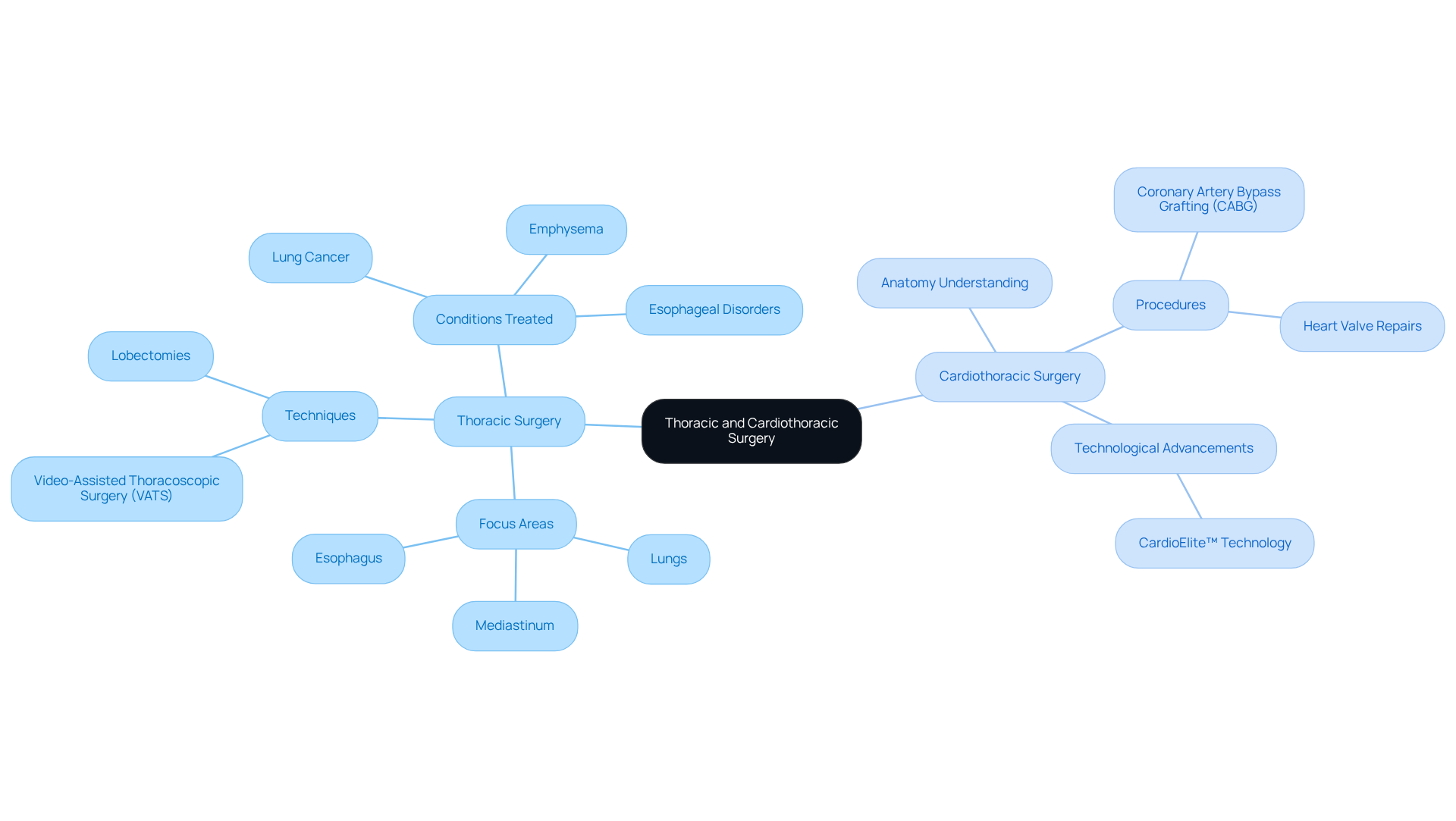
Thoracic surgery is a specialized field that focuses on surgical interventions involving the chest organs, particularly the lungs, esophagus, and mediastinum. If you or a loved one is facing issues like lung cancer, emphysema, or esophageal disorders, know that thoracic specialists are here to help. They utilize advanced techniques, such as video-assisted thoracoscopic surgery (VATS) and lobectomies, to provide the best care possible.
In addition to this, heart and chest surgery encompasses both chest and cardiac procedures, specifically targeting the heart and major vessels alongside the chest organs. Cardiothoracic specialists perform complex operations like coronary artery bypass grafting (CABG) and heart valve repairs. This requires a deep understanding of both cardiac and thoracic anatomy, ensuring that patients receive comprehensive care tailored to their needs.
Understanding the distinction of thoracic surgeon vs cardiothoracic surgeon is vital, as it clarifies the scope of practice for each specialty. As of 2026, there are approximately 4,000 cardiothoracic surgeons practicing in the U.S., all dedicated to improving patient outcomes. Recent advancements in the field highlight the importance of personalized surgical approaches, especially when managing conditions like moderate aortic stenosis during CABG.
Furthermore, with 25% of individuals with heart failure relying on post-acute care centers, the integration of Amavita's CardioElite™ technology is a significant step forward. This innovative technology enhances diagnostic capabilities, allowing for thorough cardiac evaluations right at the bedside. It not only supports surgical teams in making informed decisions but also underscores the evolving nature of these specialties.
Ultimately, these advancements showcase how improved diagnostics can lead to better patient outcomes. If you have concerns about your heart or lung health, don’t hesitate to reach out for support. You are not alone in this journey, and there are compassionate professionals ready to help you every step of the way.
When it comes to your heart and chest health, understanding the roles of a thoracic surgeon vs cardiothoracic surgeon can be reassuring. The training paths of a thoracic surgeon vs cardiothoracic surgeon are extensive but diverge at certain points. A chest specialist typically completes a general surgery residency lasting 5 to 7 years, followed by a 2 to 3-year fellowship in chest surgery, focusing on the organs of the chest, excluding the heart. In contrast, a heart and chest specialist, when considering the difference between a thoracic surgeon vs cardiothoracic surgeon, completes a general surgery residency before embarking on a focused fellowship in heart and chest operations, which includes training in both cardiac and thoracic procedures.
This extra training equips heart and lung specialists with a wider skill set, allowing them to manage intricate cases that involve both organs. The skills needed for both specialties encompass advanced surgical techniques, critical thinking, and the capability to handle high-stakes situations. However, specialists like thoracic surgeons vs cardiothoracic surgeons must also excel in cardiac-specific procedures, ensuring comprehensive care for patients like you.
Notably, the average salary for a thoracic specialist in the U.S. is projected to be $521,887 annually in 2025, reflecting the financial rewards associated with this demanding profession. As Dr. James Fann, a cardiothoracic specialist, emphasizes, "Cardiothoracic surgery is complex and critical, requiring intense training."
The complete educational and training journey for these medical professionals spans a minimum of 15 to 18 years after high school. This highlights the dedication and commitment required to enter these specialties, ensuring that you receive the best possible care. Remember, you are not alone in this journey; there are skilled professionals ready to support you every step of the way.

Thoracic specialists play a vital role in addressing conditions that affect the lungs and chest, such as lung cancer, pleural effusions, and esophageal disorders. They perform essential procedures like lobectomies, wedge resections, and thoracotomies to effectively treat these conditions. On the other hand, heart specialists focus on heart-related issues, including coronary artery disease, heart valve disorders, and congenital heart defects. Their surgical skills encompass coronary artery bypass grafting (CABG), valve replacements, and heart transplants, which are crucial for managing serious cardiac conditions.
As we look ahead to 2026, coronary artery disease continues to be a significant health concern in the U.S., contributing to high rates of morbidity and mortality. Understanding the unique roles and shared processes of these two types of medical professionals is essential for individuals. This knowledge empowers patients to make informed choices about consulting a specialist, particularly when considering a thoracic surgeon vs cardiothoracic surgeon, based on their specific health needs. For instance, someone with coronary artery disease would benefit from the expertise of a heart specialist, while a person facing lung cancer would require the skills of a chest specialist.
In addition to this, comprehensive programs like Amavita's CardioElite™ can greatly enhance the management of individuals with cardiac conditions. By focusing on proactive, data-driven care, CardioElite™ not only helps reduce readmissions by up to 70% but also improves hospital quality scores. This program exemplifies how specialized care can adapt to meet the evolving needs of patients, ultimately leading to better outcomes and supporting the efforts of both chest and heart specialists.
If you or a loved one are facing health challenges, remember that you’re not alone. Reach out to a specialist who can guide you through your options and provide the compassionate care you deserve.

When it comes to chest and heart surgery, there’s a significant overlap, especially in how we address issues affecting both the heart and lungs. Cardiothoracic specialists are equipped to handle complex situations that require a dual focus. For instance, think about individuals diagnosed with lung cancer who also have heart disease. This comprehensive approach is vital, as it allows for integrated treatment plans that consider the connection between cardiac and pulmonary health.
On the other hand, the distinction between thoracic surgeon vs cardiothoracic surgeon lies in their concentration on problems impacting the thoracic cavity, like the lungs and esophagus. They often refer patients with cardiac concerns to their colleagues, whether a thoracic surgeon vs cardiothoracic surgeon, for specialized care. This teamwork not only improves outcomes but also underscores the importance of understanding the unique roles within these surgical specialties.
Consider a recent case involving a 73-year-old patient who underwent simultaneous robotic surgery for both a pulmonary lesion and a mitral valve defect. This example beautifully illustrates the potential benefits of coordinated care between these two fields. It’s essential to recognize both the distinctions and overlaps in practice, ensuring that patients receive tailored treatment based on their specific health needs.
If you or a loved one are facing similar health challenges, remember that you’re not alone. There’s a dedicated team ready to support you every step of the way.

Understanding the differences between thoracic and cardiothoracic surgeons is essential for patients seeking specialized care for chest-related health issues. Both specialties play vital roles in managing conditions affecting the thoracic cavity, but their focus areas and training paths differ significantly. Thoracic surgeons primarily address lung and esophageal conditions, while cardiothoracic surgeons handle complex heart and chest procedures. This distinction underscores the importance of selecting the right specialist based on your individual health needs.
Key insights reveal that:
This enables a comprehensive approach to patient care. The collaboration between these specialists is crucial, especially for patients with overlapping health concerns, such as those suffering from both lung cancer and heart disease. This integration of skills and knowledge ultimately enhances patient outcomes and promotes a more holistic approach to treatment.
In light of these distinctions and the advancements in surgical techniques and technologies, it’s imperative for patients to seek the appropriate specialist for their specific conditions. Empowering yourself with knowledge about these differences can lead to informed decisions and better health management. As medical technology continues to evolve, staying informed about the roles of thoracic and cardiothoracic surgeons will ensure that you receive the compassionate and effective care you deserve.
What is thoracic surgery?
Thoracic surgery is a specialized field focusing on surgical interventions involving the chest organs, particularly the lungs, esophagus, and mediastinum.
What conditions are treated by thoracic surgeons?
Thoracic surgeons treat conditions such as lung cancer, emphysema, and esophageal disorders.
What advanced techniques do thoracic specialists use?
Thoracic specialists utilize advanced techniques like video-assisted thoracoscopic surgery (VATS) and lobectomies.
What does cardiothoracic surgery encompass?
Cardiothoracic surgery includes both chest and cardiac procedures, specifically targeting the heart, major vessels, and chest organs.
What types of operations do cardiothoracic specialists perform?
Cardiothoracic specialists perform complex operations such as coronary artery bypass grafting (CABG) and heart valve repairs.
How many cardiothoracic surgeons are practicing in the U.S. as of 2026?
As of 2026, there are approximately 4,000 cardiothoracic surgeons practicing in the U.S.
Why is it important to understand the distinction between thoracic and cardiothoracic surgeons?
Understanding the distinction clarifies the scope of practice for each specialty, ensuring patients receive appropriate care tailored to their needs.
What is the significance of Amavita's CardioElite™ technology?
Amavita's CardioElite™ technology enhances diagnostic capabilities for cardiac evaluations at the bedside, supporting surgical teams in making informed decisions.
How does improved diagnostics impact patient outcomes?
Improved diagnostics can lead to better patient outcomes by allowing for personalized surgical approaches and thorough evaluations.
What should individuals do if they have concerns about their heart or lung health?
Individuals with concerns about their heart or lung health are encouraged to reach out for support, as there are compassionate professionals ready to help.