


Have you ever wondered why cardiac arrest symptoms in women can be so different from those in men? Understanding these differences is important, especially since they can often be subtle. Caregivers are often the first to notice when something isn’t quite right. Symptoms like fatigue, shortness of breath, or nausea can be easily overlooked, but they’re important to recognize. Early detection can truly make a difference.
So, how can caregivers feel more confident in identifying these unique symptoms? By being aware and informed, caregivers can ensure timely medical intervention, which is crucial for improving survival rates. Remember, you’re not alone in this journey; support is available to help you navigate these challenges.
Did you know that heart attack symptoms in women can often be more subtle than you might expect? Cardiac arrest occurs when the heart suddenly stops beating, halting blood flow to the brain and other vital organs. Many women may not recognize their symptoms as serious, leading to delays in seeking help. Instead of the classic signs like chest pain, women may experience a range of symptoms, including:
Comprehending these signs is essential for caregivers, as prompt identification and intervention can greatly enhance outcomes. Recognizing these signs can be a lifesaver, ensuring that women receive the timely care they need to thrive. Dr. Nieca Goldberg highlights that awareness of early warning signs could enhance diagnosis and healthcare for individuals who frequently do not display typical heart attack indicators. Moreover, calling 911 prior to a collapse from sudden heart failure raises the chances of survival by over five times. Understanding these gender distinctions in heart attack indicators is crucial for efficient caregiving and guaranteeing that females receive the necessary medical care when required. Amavita's innovative AI-powered diagnostic technology, including the CardioElite™ program, enhances early detection and supports informed decision-making in cardiac care.

Understanding the early warning signs of heart issues is crucial for women, and with the right support, we can navigate these concerns together. It's important for caregivers to be aware of these symptoms in women:
Symptoms such as nausea, vomiting, or general malaise can indicate cardiac arrest symptoms in females and should not be overlooked. The seamless coordination of care provided by Amavita ensures that these signs are monitored effectively.
Being aware of these signs can help caregivers feel empowered to take prompt action, ensuring that help is on the way when it’s needed most. Every minute counts in an emergency, and knowing how to act quickly can make all the difference in survival rates. It's important to remember that many individuals experience warning signs before a heart event, which is why awareness and support are so vital.

Have you ever noticed that women often experience cardiac arrest symptoms in females differently than men? This difference can lead to misdiagnosis and delayed care, especially in recognizing cardiac arrest symptoms in females. Here are some key symptoms that women may experience:
It's crucial for caregivers to recognize cardiac arrest symptoms in females, as this enables them to provide the necessary support that women need and seek timely medical help, ultimately improving outcomes for those facing heart distress.
In a moment of crisis, every second counts, and knowing what to do can make all the difference. If you suspect cardiac arrest, the first step is to call emergency services. Dial 911 immediately to ensure professional help is on the way.
Next, gently check if the person is responsive by shaking them lightly and speaking to them. If the person is unresponsive and not breathing, don’t hesitate to start CPR right away. Your actions can truly make a difference. Push hard and fast in the center of the chest at a rate of 100-120 compressions per minute. Early CPR can double or triple the chance of survival, with survival rates increasing to as much as 50 percent when CPR and an AED are used promptly.
If you have access to an AED, use it as soon as possible, following the voice prompts carefully. Remember, you’re not alone in this; help is on the way. As Austin Kane, M.D. states, "If there’s one message to remember, it’s call 911, start chest compressions and use an AED. Call, push, shock."
Keep performing CPR until help arrives or the person shows signs of life. Your commitment to acting quickly can significantly improve their chances of survival, as every minute without CPR decreases the chances of survival by 10 percent. This highlights the importance of the Chain of Survival, which emphasizes the need for quick action when addressing cardiac arrest symptoms in females. Remember, your quick actions can be the key to saving a life, so stay calm and act decisively.

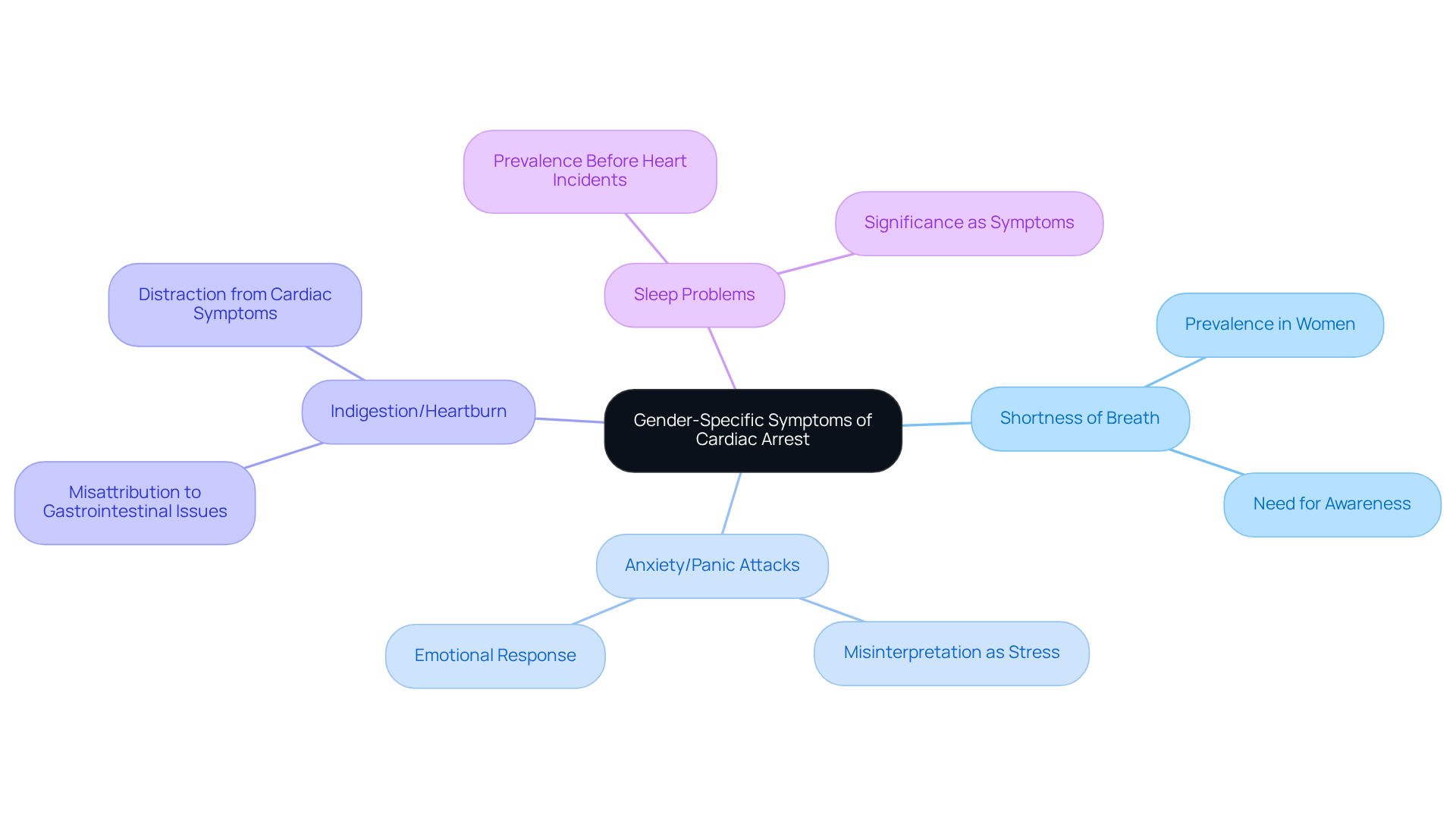
It’s crucial for caregivers to understand that women may show different signs of cardiac arrest, which can often be subtle and easily missed. Throughout this article, we’ve discussed key symptoms like:
These can signal potential cardiac arrest in women. Additionally, being aware of gender-specific signs, such as back pain or anxiety, highlights the importance of vigilance among caregivers. By being informed and proactive, caregivers can play a crucial role in ensuring that women receive the necessary medical attention when it matters most.
The importance of recognizing and responding to these cardiac arrest symptoms is truly vital for the well-being of women. Every second counts in an emergency, and awareness can save lives. Caregivers are encouraged to equip themselves with knowledge and resources to respond effectively, reinforcing the message that recognizing these symptoms is essential for enhancing the health and well-being of women. By staying informed and prepared, caregivers can truly make a difference in the lives of women facing cardiac distress, offering them the support they need when it matters most.
What is cardiac arrest?
Cardiac arrest occurs when the heart suddenly stops beating, halting blood flow to the brain and other vital organs.
How do heart attack symptoms in women differ from those in men?
Heart attack symptoms in women can be more subtle and may not include the classic signs like chest pain. Women may experience symptoms such as shortness of breath, unusual tiredness, nausea or vomiting, and lightheadedness or dizziness.
What are some common symptoms of a heart attack in women?
Common symptoms in women include shortness of breath, feeling unusually tired, nausea or vomiting, and lightheadedness or dizziness.
Why is it important for women to recognize heart attack symptoms?
Many women may not recognize their symptoms as serious, which can lead to delays in seeking help. Prompt identification and intervention can greatly enhance outcomes and potentially save lives.
What percentage of women report unusual tiredness before a heart event?
Studies show that 70% of women experience an unusual degree of tiredness in the days or weeks preceding a heart event.
How can caregivers help in recognizing heart attack symptoms in women?
Caregivers should be aware of the signs of heart attack in women, as prompt identification can lead to timely care and improved outcomes.
What should be done if someone is experiencing symptoms of cardiac arrest?
It is crucial to call 911 prior to a collapse from sudden heart failure, as this action raises the chances of survival by over five times.
How does Amavita support women's heart health?
Amavita offers comprehensive cardiac evaluations to identify the specific causes of fatigue and create personalized treatment plans. They also utilize innovative AI-powered diagnostic technology, including the CardioElite™ program, to enhance early detection and support informed decision-making in cardiac care.