


Understanding the complexities of cardiac output is crucial for heart health, especially as we age. This important measure shows how well the heart pumps blood, which directly affects our overall well-being and energy levels. But what happens when cardiac output decreases? How can we recognize the signs that might indicate a health crisis?
Exploring the symptoms of decreased cardiac output and the essential diagnostic procedures available can empower you to take proactive steps toward better cardiovascular health. Remember, you’re not alone in this journey. By understanding these signs, you can seek help and improve your quality of life.
In addition to this, being aware of your heart's health can lead to a more vibrant and fulfilling life. If you notice any changes, don’t hesitate to reach out for support. Your heart deserves the best care, and taking action now can make all the difference.
Cardiac output (CO) is the volume of fluid your heart pumps each minute, usually measured in liters. It’s a crucial indicator of how well your heart is functioning and your overall cardiovascular health. You can calculate cardiac output using this simple formula:
CO = Stroke Volume (SV) × Heart Rate (HR)
Here’s what that means: stroke volume is the amount of blood your heart ejects with each beat, while heart rate tells you how many times your heart beats in a minute. Typically, a healthy heart pumps between 4 to 8 liters each minute, but this can vary based on factors like age, body size, and fitness level.
Understanding how your heart performs is especially important as we age. Serious health issues, such as fatigue, weakness, and even organ failure, can arise from decreased cardiac output symptoms. Recent studies show that older adults with heart problems often experience symptoms of decreased cardiac output, which can increase the risk of negative health effects. For instance, individuals with cardiovascular conditions had an average Life’s Essential 8 score below 60, highlighting the need for proactive management of heart health.
Maintaining adequate blood flow is vital for ensuring that oxygen and nutrients reach your tissues, helping to prevent complications related to cardiovascular disease. As Dr. Latha P. Palaniappan emphasizes, improving cardiovascular health is essential for enhancing both life expectancy and quality of life, particularly for older adults.
If you’re feeling concerned about your heart health, remember that you’re not alone. It’s important to reach out for support and take steps towards better cardiovascular well-being. Together, we can work towards a healthier future.

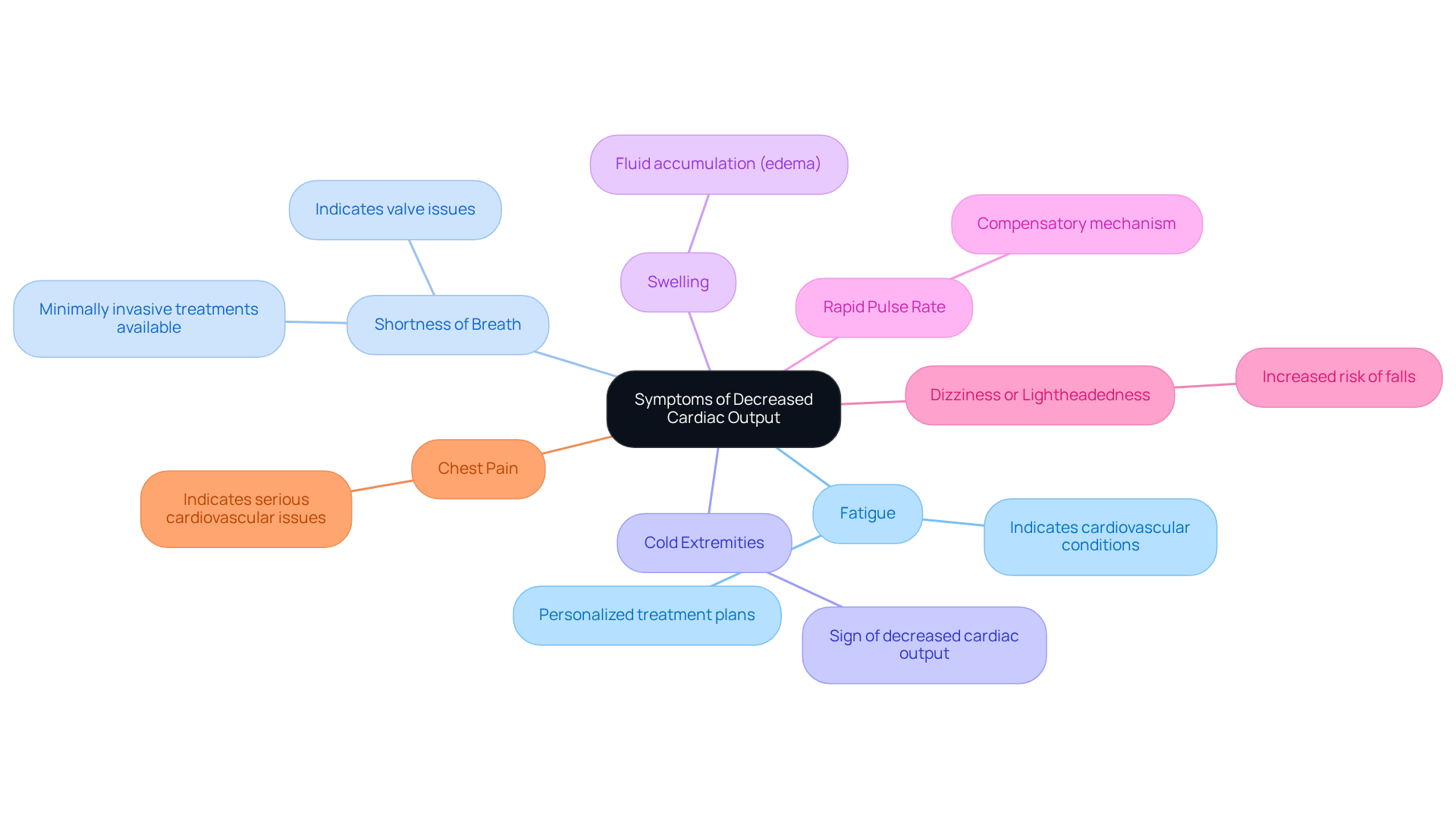
Symptoms of decreased cardiac output can vary, but they often include:
Fatigue: This common symptom can leave you feeling unusually tired, even with minimal exertion. It might signal various cardiovascular conditions, such as coronary artery disease or valve issues that affect your heart's pumping efficiency. At Amavita Cardiovascular Health®, we understand how concerning this can be. Our thorough cardiac assessment helps identify the specific cause of your fatigue, allowing us to create a personalized treatment plan aimed at enhancing your heart's performance and revitalizing your energy levels.
Shortness of Breath: If you experience shortness of breath during physical activity or while lying down, it could be one of the decreased cardiac output symptoms indicating that the heart valves aren’t functioning properly. This can make your heart work harder, leading to breathlessness and fatigue. Dr. Martinez-Clark at Amavita specializes in minimally invasive valve treatments that can significantly improve your breathing and energy levels, often allowing for same-day discharge.
Cold Extremities: You might notice that your hands and feet feel cold, which can be a sign of decreased cardiac output symptoms.
Swelling: Fluid accumulation in the legs, ankles, or abdomen, known as edema, can occur as a result of decreased cardiac output symptoms.
Rapid Pulse Rate: An elevated pulse rate may happen as your body tries to compensate for decreased cardiac output symptoms.
Dizziness or Lightheadedness: You might experience decreased cardiac output symptoms, particularly feelings of faintness, especially when standing up quickly.
Chest Pain: Discomfort or pain in the chest area can indicate decreased cardiac output symptoms and other underlying cardiovascular issues, which should not be ignored.
Recognizing decreased cardiac output symptoms is crucial for timely intervention. With Amavita's AI-powered CardioElite™ program, we offer real-time guidance and advanced diagnostic technology to ensure accurate imaging and early detection. If you or someone you care about experiences these signs, please don’t hesitate to reach out to a healthcare provider for further evaluation. Your health and well-being are our top priorities.
When it comes to diagnosing decreased cardiac output symptoms, we understand that it can be a concerning experience. At Amavita, we’re here to support you with our innovative diagnostic technology, ensuring you receive the best care possible. Here are some key procedures we use:
Each of these diagnostic tools plays a vital role in understanding the reasons behind decreased cardiac output symptoms and guiding us toward the most suitable treatment options for you. With Amavita's advanced diagnostic capabilities and seamless care coordination, including our AHA certification that enhances our credibility, we strive to improve your outcomes. This means fewer hospital readmissions and a more supportive environment for our healthcare staff, all focused on your well-being.
We’re here for you every step of the way, ensuring you feel valued and cared for. If you have any questions or concerns, please don’t hesitate to reach out. Your health is our priority.

Managing decreased cardiac output symptoms involves recognizing and addressing the underlying causes to help improve your circulatory function. Here are some key treatment options that can make a difference:
Medications: You might be prescribed medications like diuretics to help with fluid overload, ACE inhibitors for blood pressure management, and inotropes to boost heart contractility. Recently, new medications have emerged in heart failure management, specifically designed to support heart output in elderly patients like you.
Lifestyle Modifications: Embracing a heart-healthy lifestyle is vital. This means enjoying a balanced diet filled with fruits, vegetables, and whole grains, staying active, and quitting smoking. Many patients who make these changes often see significant improvements in their heart health, which can help reduce decreased cardiac output symptoms and lead to better overall outcomes.
Cardiac Rehabilitation: Participating in a structured cardiac rehabilitation program can be life-changing. These programs typically include exercise training, education on cardiovascular health, and counseling, all aimed at helping you recover and enhance your heart function.
Surgical Interventions: In some cases, surgery might be necessary. Procedures like valve repair or replacement, coronary artery bypass grafting, or even the implantation of devices such as pacemakers can be crucial in restoring your heart's function.
Monitoring and Follow-Up: Regular follow-up appointments are essential for checking how well your treatment is working and making any needed adjustments. This ongoing assessment ensures you receive the best care tailored to your evolving needs.
By understanding and actively participating in these management strategies, you can work closely with your healthcare providers to optimize your heart health and improve your quality of life. Remember, you’re not alone in this journey; support is always available.

Understanding decreased cardiac output and its symptoms is crucial for maintaining optimal heart health. Have you ever felt unusually tired or experienced shortness of breath? Recognizing the significance of cardiac output can empower you to monitor your cardiovascular well-being and address any concerning symptoms promptly.
Key insights from this article highlight the importance of identifying symptoms such as:
These may indicate decreased cardiac output. Diagnostic procedures like echocardiograms and ECGs are essential in assessing heart function. Furthermore, various management strategies - including medications, lifestyle modifications, and cardiac rehabilitation - can significantly improve health outcomes.
The path to better heart health begins with awareness and action. By staying informed about decreased cardiac output symptoms and seeking appropriate medical care, you can enhance your quality of life and reduce the risks associated with cardiovascular disease. Embracing a heart-healthy lifestyle and engaging in regular check-ups can pave the way for a healthier future. Remember, understanding cardiac output is vital for your overall health, and you are not alone on this journey.
What is cardiac output (CO)?
Cardiac output (CO) is the volume of fluid that the heart pumps each minute, typically measured in liters. It is a crucial indicator of heart function and overall cardiovascular health.
How is cardiac output calculated?
Cardiac output is calculated using the formula: CO = Stroke Volume (SV) × Heart Rate (HR). Stroke volume is the amount of blood ejected by the heart with each beat, while heart rate indicates how many times the heart beats in a minute.
What is the typical range of cardiac output for a healthy heart?
A healthy heart typically pumps between 4 to 8 liters of blood each minute, although this can vary based on factors such as age, body size, and fitness level.
Why is understanding cardiac output important, especially as we age?
Understanding cardiac output is important because decreased cardiac output can lead to serious health issues, such as fatigue, weakness, and even organ failure. Older adults with heart problems are particularly at risk for symptoms related to decreased cardiac output.
What are the potential health risks associated with decreased cardiac output?
Decreased cardiac output can increase the risk of negative health effects, including complications related to cardiovascular disease. For example, individuals with cardiovascular conditions often have lower health scores, indicating the need for proactive heart health management.
How does maintaining adequate blood flow relate to cardiovascular health?
Maintaining adequate blood flow is vital for ensuring that oxygen and nutrients reach tissues throughout the body, which helps to prevent complications associated with cardiovascular disease.
What can individuals do if they are concerned about their heart health?
If you are concerned about your heart health, it is important to reach out for support and take proactive steps towards improving cardiovascular well-being.