Introduction
Understanding the nuances of heart disease in women is crucial. This condition often shows up differently than it does in men, and it’s important to recognize that. Unique hormonal, anatomical, and psychosocial factors create a landscape where women may face cardiovascular challenges later in life, often with more severe consequences.
As we see troubling statistics revealing a rise in cardiovascular conditions among women, it’s natural to wonder: how can women recognize the subtle yet significant symptoms of heart disease? What steps can they take to safeguard their health?
It’s essential to address these concerns with care and compassion. By being aware of the signs and seeking help, women can take proactive measures to protect themselves. Remember, you’re not alone in this journey; support is available, and taking action can lead to a healthier future.
Explore the Unique Aspects of Heart Disease in Women
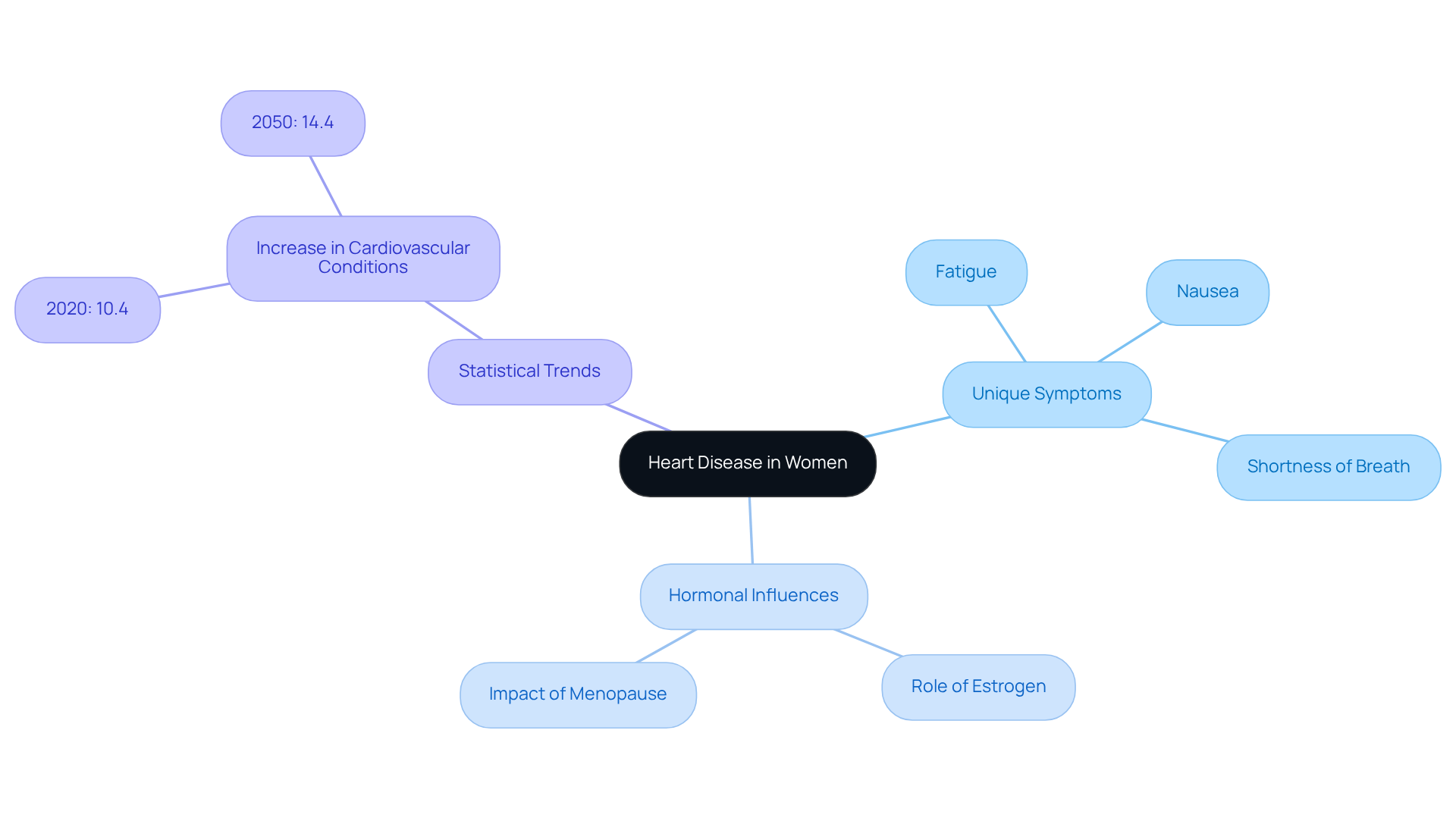
Heart conditions in women often present unique traits compared to men, influenced by hormonal, anatomical, and psychosocial factors. Did you know that women typically experience cardiovascular issues about ten years later than men? This delay is largely due to the protective benefits of estrogen. However, after menopause, when estrogen levels drop, the risk of conditions like coronary artery disease and heart failure significantly increases. In fact, studies predict that the percentage of women living with stroke or cardiovascular conditions will rise from 10.4% in 2020 to 14.4% by 2050. This statistic underscores the urgent need to address women's cardiovascular health.
Many women report unusual heart disease symptoms such as:
- Fatigue
- Nausea
- Shortness of breath
These symptoms can complicate diagnosis and delay treatment. This difference in how women's heart disease symptoms present highlights the importance for both patients and healthcare providers to recognize these unique aspects of cardiovascular issues in women. Hormonal changes, particularly during menopause, play a crucial role in this increased vulnerability, as estrogen is known to positively affect vascular health and blood pressure regulation. Understanding these factors is essential for ensuring timely and effective treatment for those at risk of cardiovascular problems.
If you or someone you know is experiencing these symptoms, it’s important to seek help. Remember, you’re not alone in this journey. There are resources and support available to guide you through understanding your heart health better. Together, we can work towards a healthier future.
Identify Key Symptoms of Heart Disease in Women
Women often experience women's heart disease symptoms that can be quite different from what men typically show. Recognizing women's heart disease symptoms is important, as they can be subtle yet significant. Here are some key symptoms to keep in mind:
- Chest discomfort: Instead of sharp pain, women might feel pressure, squeezing, or a sense of fullness. This can make it harder to identify.
- Shortness of breath: This can occur during physical activity or even at rest, which can be misleading. At Amavita Heart and Vascular Health, we provide advanced imaging and thorough evaluations to help assess these symptoms effectively.
- Fatigue: If you’re feeling unexplained tiredness that doesn’t go away with rest, it’s a serious warning sign that shouldn’t be ignored. Our preventive cardiology approach is designed to develop strategies for addressing these concerns, especially for high-risk patients, including those with diabetes or hypertension.
- Nausea or vomiting: These symptoms can often be mistaken for gastrointestinal issues, leading to misdiagnosis.
- Pain in the neck, jaw, or back: Many women report discomfort in these areas more frequently than chest pain, which can complicate recognition.
It is crucial to understand and identify women's heart disease symptoms. Research indicates that women are more likely to delay seeking medical help due to the atypical presentation of women's heart disease symptoms. In fact, 1 in 5 individuals dies from cardiovascular disease each year in the U.S., highlighting the urgency of recognizing these signs. Dr. Stacey Rosen reminds us, "If you wait too long, the damage can be more significant." This delay can lead to more serious health consequences, underscoring the need for increased awareness and education about women’s cardiovascular health.
At Amavita, we encourage individuals to advocate for themselves in healthcare settings, ensuring their concerns are taken seriously. We invite you to consider our comprehensive cardiovascular assessments and executive health screenings as proactive steps to reduce the risk of a cardiac event. Remember, you’re not alone in this journey, and we’re here to support you every step of the way.

Understand Risk Factors Specific to Women
Several risk factors uniquely affect women's heart health, and it's important to understand them to ensure the best care possible:
- Hormonal changes: Fluctuations in estrogen levels, especially during menopause, can significantly increase the risk of heart disease. Research shows that as women age and experience these hormonal shifts, they face a higher likelihood of cardiovascular issues. Amavita's CardioElite™ program is here to help, offering advanced, real-time diagnostic data and 24/7 cardiology consultation to support proactive patient management.
- Pregnancy-related conditions: Complications like gestational diabetes and preeclampsia can raise long-term cardiovascular risks. This highlights the need for ongoing monitoring of heart health for those who have faced such challenges during pregnancy. The emerging field of cardio-obstetrics underscores the importance of specialized care for expectant individuals, supported by Amavita's comprehensive cardiovascular management strategies.
- Autoimmune conditions: Disorders such as lupus and rheumatoid arthritis, which are more prevalent in women, can increase the risk of heart problems. The inflammation associated with these conditions can lead to cardiovascular complications. Amavita's approach includes personalized interventions that take these unique health challenges into account.
- Mental health: Depression and anxiety are more common among women and can negatively impact heart health. Studies indicate that mental health conditions can lead to poorer cardiovascular outcomes, emphasizing the need for integrated care. Amavita recognizes this connection and thoughtfully incorporates mental health considerations into its cardiac care plans.
- Lifestyle factors: Smoking, obesity, and physical inactivity are significant contributors to heart disease risk. Making lifestyle changes can lead to meaningful improvements in cardiovascular health. Regular exercise and a balanced diet are essential steps in reducing these risks. Amavita's preventive cardiology approach combines advanced risk evaluation tools with tailored strategies to help lower the risk of heart attacks.
As cardiovascular specialists point out, women's heart disease symptoms often present differently and can be overlooked. This underscores the need for personalized healthcare approaches. Alarmingly, maternal mortality rates in the U.S. are particularly high among Black individuals, with cardiovascular disease being the leading cause of pregnancy-related death, accounting for 33% of fatalities. Amavita is dedicated to thorough cardiac assessments and minimally invasive therapies, striving to improve outcomes for those facing these challenges.
If you or someone you know is concerned about heart health, please reach out. We're here to support you every step of the way.

Implement Strategies for Heart Health Protection
To safeguard heart health, women can embrace several effective strategies that truly make a difference:
- Maintain a Healthy Diet: It’s important to focus on a heart-healthy diet rich in fruits, vegetables, whole grains, and lean proteins. At the same time, try to minimize saturated fats and added sugars. The American Heart Association suggests keeping added sugar to less than 10% of daily calories. Incorporating more plant-based proteins, like beans and lentils, can also enhance your dietary quality.
- Regular Physical Activity: Aim for at least 150 minutes of moderate aerobic exercise each week. Engaging in activities such as walking or cycling not only boosts cardiovascular health but also helps with weight control. This is crucial, as obesity can lead to serious circulatory conditions. For young girls, being overweight can result in higher blood pressure and diabetes, increasing the risk of cardiovascular issues later on.
- Manage Stress: Integrating stress-reducing practices like mindfulness, yoga, or meditation into your daily routine can be incredibly beneficial. Effectively managing stress can lower blood pressure and improve overall cardiovascular health.
- Regular Health Screenings: It’s essential to monitor your blood pressure, cholesterol levels, and blood sugar regularly. Being aware of these specific numbers is vital, as early detection of potential problems can make a significant difference. Remember, high blood pressure is the primary changeable factor for cardiovascular conditions.
- Avoid Smoking and Limit Alcohol: Quitting smoking and reducing alcohol intake can greatly lower the risk of cardiovascular issues. Women should aim to limit alcohol consumption to no more than one drink daily, which is equivalent to 12 ounces of beer, 4 to 5 ounces of wine, or 1-1/2 ounces of 80-proof spirits, to help maintain cardiovascular wellness.
By adopting these strategies, women can take proactive steps to enhance their heart health, understand women's heart disease symptoms, and reduce the risk of cardiovascular disease, which remains the leading cause of death among women globally. Remember, you’re not alone in this journey; seeking support and making small changes can lead to a healthier, happier life.

Conclusion
Understanding the unique aspects of heart disease in women is essential for improving diagnosis, treatment, and overall health outcomes. Women experience cardiovascular issues differently than men, often showing atypical symptoms that can lead to misdiagnosis and delayed treatment. Recognizing these differences is crucial for both healthcare providers and patients, especially as the risk of heart disease increases significantly after menopause and due to other unique factors affecting women's health.
Have you ever felt fatigued or experienced nausea without a clear reason? These can be key symptoms of heart disease that women may face, alongside atypical chest discomfort. It's important to be aware of specific risk factors too, such as:
- Hormonal changes
- Pregnancy-related conditions
- Autoimmune disorders
- Mental health challenges
By understanding these elements, you can better advocate for your health and seek timely medical attention when necessary.
Taking proactive steps to protect your heart health is vital. You can significantly reduce your risk of cardiovascular disease by adopting heart-healthy lifestyle changes. Consider:
- Maintaining a balanced diet
- Engaging in regular physical activity
- Managing stress
Prioritizing awareness and education around women's heart health is imperative; this knowledge empowers you to make informed decisions and fosters a healthier future. Together, increased awareness and proactive measures can lead to better health outcomes for women everywhere. Remember, you are not alone in this journey, and support is always available.
Frequently Asked Questions
How do heart conditions in women differ from those in men?
Heart conditions in women often present unique traits influenced by hormonal, anatomical, and psychosocial factors, leading to differences in symptoms and risk factors compared to men.
At what age do women typically experience cardiovascular issues compared to men?
Women typically experience cardiovascular issues about ten years later than men, largely due to the protective benefits of estrogen.
How does menopause affect women's heart health?
After menopause, when estrogen levels drop, the risk of conditions like coronary artery disease and heart failure significantly increases.
What is the predicted trend for women living with stroke or cardiovascular conditions by 2050?
Studies predict that the percentage of women living with stroke or cardiovascular conditions will rise from 10.4% in 2020 to 14.4% by 2050.
What are some unusual symptoms of heart disease that women may experience?
Many women report unusual heart disease symptoms such as fatigue, nausea, and shortness of breath.
Why is it important for healthcare providers to recognize the unique aspects of cardiovascular issues in women?
Recognizing the unique symptoms and risk factors for women is crucial for timely diagnosis and effective treatment, as these symptoms can complicate diagnosis and delay care.
What role does estrogen play in women's cardiovascular health?
Estrogen positively affects vascular health and blood pressure regulation, and its decline during menopause increases women's vulnerability to heart disease.
What should individuals do if they experience symptoms of heart disease?
If you or someone you know is experiencing symptoms like fatigue, nausea, or shortness of breath, it's important to seek help and remember that there are resources and support available for understanding heart health.
List of Sources
- Explore the Unique Aspects of Heart Disease in Women
- Scientists Find This Controversial Treatment May Lower Heart Disease Risk (https://prevention.com/health/a70768075/hypertension-risk-after-menopause-study)
- Did you know? Women, Hormones, and Heart Risk (https://adventhealth.com/institutes/research/news/did-you-know-women-hormones-and-heart-risk)
- Sex Differences in Age of Onset of Premature Cardiovascular Disease and Subtypes: The Coronary Artery Risk Development in Young Adults Study | Journal of the American Heart Association (https://ahajournals.org/doi/10.1161/JAHA.125.044922)
- Heart Disease in Women Is Often Different Than In Men | Brown University Health (https://brownhealth.org/be-well/heart-disease-women-often-different-men)
- What Are the Differences in Cardiovascular Disease Between the Sexes? (https://news.cuanschutz.edu/news-stories/what-are-the-differences-in-cardiovascular-disease-between-the-sexes)
- Identify Key Symptoms of Heart Disease in Women
- Women Suffer Heart Attacks Too. Understanding Risks, Symptoms and How to Save Yourself (https://usnews.com/news/health-news/articles/2026-02-23/women-suffer-heart-attacks-too-understanding-risks-symptoms-and-how-to-save-yourself)
- Heart disease in women: Key symptoms, risk factors and prevention tips | Cultivating Health (https://health.ucdavis.edu/blog/cultivating-health/heart-disease-in-women-key-symptoms-risk-factors-and-prevention-tips/2026/02)
- Women urged not to ignore subtle heart attack symptoms as cases rise in younger adults (https://fox23.com/news/women-urged-not-to-ignore-subtle-heart-attack-symptoms-as-cases-rise-in-younger-adults/article_53e90469-cfb3-4a79-839f-69b448b440d3.html)
- Heart disease in women: Understand symptoms and risk factors (https://mayoclinic.org/diseases-conditions/heart-disease/in-depth/heart-disease/art-20046167)
- More young women are dying from heart disease — and people are missing these warning signs (https://vox.com/health/481621/heart-attack-disease-symptoms-women-warning-signs)
- Understand Risk Factors Specific to Women
- A Heart Disease Reckoning for Women Is Here (https://healthcentral.com/condition/heart-disease/a-heart-disease-reckoning-for-women-is-here)
- Did you know? Women, Hormones, and Heart Risk (https://adventhealth.com/institutes/research/news/did-you-know-women-hormones-and-heart-risk)
- Women's heart health demands unique attention (https://northwell.edu/news/insights/womens-heart-health-demands-unique-attention)
- 6 in 10 U.S. women projected to have at least one type of cardiovascular disease by 2050 (https://newsroom.heart.org/news/6-in-10-u-s-women-projected-to-have-at-least-one-type-of-cardiovascular-disease-by-2050)
- Implement Strategies for Heart Health Protection
- A troubling forecast on women’s heart health – and what women and girls can do now to protect theirs (https://heart.org/en/news/2026/02/25/a-troubling-forecast-on-womens-heart-health-and-what-women-and-girls-can-do-now-to-protect-theirs)
- A Woman's Guide to Preventing Heart Disease (https://hopkinsmedicine.org/health/wellness-and-prevention/a-womans-guide-to-beating-heart-disease)
- New heart health guidelines highlight 9 key lifestyle steps (https://medicalnewstoday.com/articles/9-steps-improve-heart-health-diet-guidance-aha)
- Heart-healthy diet: 8 steps to prevent heart disease (https://mayoclinic.org/diseases-conditions/heart-disease/in-depth/heart-healthy-diet/art-20047702)
- What to Eat for Better Heart Health, According to New Guidelines (https://time.com/article/2026/03/31/what-to-eat-heart-health-diet-guidelines)


