


Many patients feel overwhelmed and confused when faced with Atrial Fibrillation (AFib), a heart condition that affects millions globally. It's important to understand AFib because it can lead to serious complications, like strokes, if not managed properly. As AFib becomes more common, you might wonder how to navigate its challenges and improve your care and quality of life. In this article, we’ll explore:
to help you feel empowered.
If you or a loved one has been diagnosed with Atrial Fibrillation (AFib), you might be feeling a mix of concern and uncertainty about what is AFib heart condition and its implications for your health.
What is AFib heart condition? It occurs when the electrical signals in the heart’s upper chambers, called the atria, become disorganized, which can make it hard for the heart to pump blood effectively. This can lead to challenges, such as the risk of blood clots or strokes, but understanding your condition is the first step towards managing it effectively.
There are different types of AFib, including:
Each type may require a different approach to treatment and care. It’s important to know that you’re not alone; over 40 million people worldwide are living with AFib, and many find themselves in the hospital each year seeking help. In fact, about 70% of those with AFib are over the age of 65, which means that many older adults may face additional challenges related to their heart health.
That’s why early detection and intervention are so important; managing AFib can help prevent long-term complications and improve your quality of life. Fortunately, there are many treatment options available today, including ablation procedures, that can help you manage AFib and lead a fulfilling life. Understanding what is AFib heart condition is crucial for developing personalized care plans, especially for older adults who may face additional health challenges, and we are here to support you every step of the way.

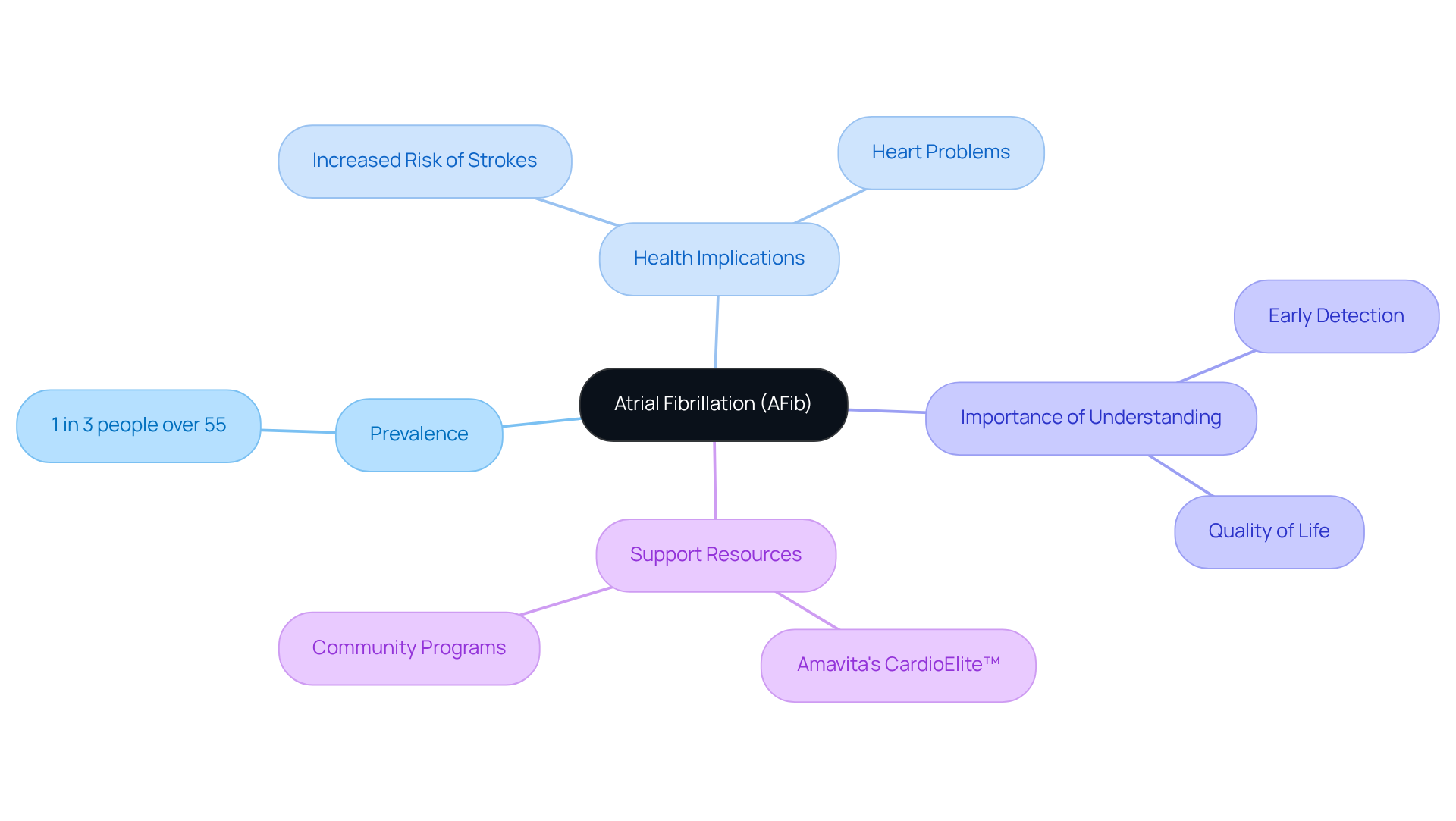
As they age, many people worry about what is afib heart condition and its implications on their health and daily lives. This condition impacts millions, particularly as we grow older, and it's natural to feel concerned about it. In fact, about one in three people over 55 may find themselves facing this condition, which can be daunting. It's important to understand what is afib heart condition, as it can significantly increase the risk of serious health issues, including strokes and heart problems, which can be quite frightening. As our population ages and health challenges like obesity and hypertension become more common, many are facing the reality of atrial fibrillation.
Understanding what is afib heart condition is crucial for both patients and healthcare providers, as early detection and care can truly make a difference in quality of life. Programs like Amavita's CardioElite™ offer valuable support, providing you with real-time insights and access to cardiology experts whenever you need them. Community programs are here to help, raising awareness about atrial fibrillation and encouraging everyone to seek help when they notice symptoms. Remember, with the right support and resources, you can take control of your health and live a fulfilling life despite atrial fibrillation.
You might notice that symptoms of what is afib heart condition can vary from person to person. Common signs include:
Some people may not feel any symptoms, which is why regular check-ups are so important for catching any issues early on.
As we age, certain factors like high blood pressure, heart issues, and even lifestyle choices can increase the risk of developing what is afib heart condition. These risk factors are especially prominent in older individuals and include:
Lifestyle factors such as smoking and physical inactivity further elevate these risks.
Recent studies indicate that the prevalence of AF is expected to double over the next 35 years, affecting nearly 38 million people globally. Moreover, screening has shown that individuals with newly detected AF have a threefold increased risk of developing heart failure compared to those without the condition. Understanding these symptoms and risk factors can help you and your healthcare provider catch what is afib heart condition early, leading to better care and outcomes.
By making some lifestyle changes and keeping up with regular check-ups, you can greatly reduce the risks tied to atrial fibrillation. Remember, you’re not alone in this journey, and there are many resources available to support you.

For elderly patients concerned about their health and well-being, managing what is afib heart condition can feel overwhelming. At Amavita Heart and Vascular Health, we understand this, which is why we take a comprehensive approach. We combine lifestyle changes, medications, and procedures tailored to your unique needs. We often start by using medications like beta-blockers and anticoagulants to help control your heart rate and rhythm. In some cases, procedures such as electrical cardioversion or catheter ablation may be necessary to restore a normal heart rhythm. Our advanced diagnostic imaging helps us identify the specific type of atrial fibrillation you have and assess any underlying conditions, ensuring a personalized treatment plan.
Making lifestyle changes is crucial for managing what is afib heart condition. Eating a heart-healthy diet, staying active, and finding ways to manage stress can really make a difference in your health. We also consider any other health conditions you may have and how your medications might interact to ensure safe and effective treatment. Ongoing monitoring and follow-up care are vital to adjust your treatment plan as needed and to address any emerging health concerns.
We're excited to share that recent advancements in catheter ablation have shown great promise. Many patients with paroxysmal AFib have found success, with over 60% experiencing positive outcomes after just one procedure. For those with persistent AFib, while the success rates are around 30% or less, we remain committed to providing the best care possible. Furthermore, research indicates a 2% per year recurrence rate for all AF types after year 2, highlighting the importance of ongoing management after ablation. With our dedicated support, you can navigate your AFib journey with confidence and peace of mind.

If you or a loved one is facing Atrial Fibrillation (AFib), it’s natural to feel overwhelmed and concerned about what this means for your health. AFib is a condition where the heart's upper chambers experience disorganized electrical signals, which can lead to feelings of uncertainty and fear about health, which is completely understandable. Recognizing the significance of AFib can empower you to seek the support and care you deserve, especially since millions are living with this condition worldwide.
There are many ways to manage AFib, and understanding your options can help you feel more in control of your health journey. Symptoms can differ from person to person, and it’s important to recognize that regular check-ups can help you stay on top of your health. From medications to procedures, there are many options available that can help improve your quality of life and bring you peace of mind.
It’s vital to talk about AFib and its effects, as understanding it can help you feel less alone in your journey. Don’t hesitate to reach out for support; there are resources available that can guide you toward better health outcomes. With the right understanding and support, you can navigate your health journey with confidence and take steps toward a brighter future.
What is Atrial Fibrillation (AFib)?
Atrial Fibrillation (AFib) is a heart condition that occurs when the electrical signals in the heart's upper chambers, called the atria, become disorganized. This disorganization can make it difficult for the heart to pump blood effectively, leading to potential complications such as blood clots and strokes.
What are the different types of AFib?
There are three main types of AFib: Paroxysmal, Persistent, and Permanent. Each type may require a different approach to treatment and care.
How common is AFib?
AFib is a common condition affecting over 40 million people worldwide. Many individuals with AFib, particularly those over 65, often seek medical help each year.
Why is early detection and intervention important for AFib?
Early detection and intervention are crucial for managing AFib effectively, as they can help prevent long-term complications and improve the quality of life for those affected.
What treatment options are available for AFib?
There are various treatment options available for managing AFib, including ablation procedures, which can help individuals lead fulfilling lives despite their condition.
Who is most affected by AFib?
Approximately 70% of individuals with AFib are over the age of 65, indicating that older adults may face additional challenges related to their heart health.