


Mild high blood pressure, often called benign hypertension, affects nearly half of older adults. Yet, many may not realize the potential risks it carries. This condition, which might seem harmless, can lead to serious health complications if not managed properly. It’s essential for individuals to understand how it impacts heart health.
How can you tell the difference between benign hypertension and more severe forms? What steps can you take to lessen its effects? Exploring these questions highlights the importance of being vigilant and making lifestyle changes to support your cardiovascular well-being. Remember, you’re not alone in this journey, and there are ways to take charge of your health.
Mild , often called essential , is a gradual and low-risk type that usually doesn’t lead to immediate organ damage. Unlike malignant , which can cause serious health issues, tends to be stable and may not show obvious symptoms. However, it’s important to recognize what is , as even though it’s labeled 'benign,' unmanaged can still pose significant risks, especially as it may worsen over time. This condition is often identified when consistently exceed normal levels but remain below those associated with more severe .
Did you know that nearly 48% of U.S. adults experienced from August 2021 to August 2023? Many individuals are unaware of their condition. In fact, only 56% of those over 50 are aware of their , and just 33% of those receiving treatment achieve the target level of less than 130/80 mmHg. Cardiologists emphasize the importance of , as untreated cases can lead to , increasing the risk of heart disease, stroke, and kidney failure. As Dr. Ahmed Kamal Aslam wisely states, 'It’s only 'benign' if it’s managed properly.' Regular check-ups and lifestyle changes are essential for maintaining healthy circulation levels and preventing long-term health issues.
At Amavita Heart and Vascular Health, we understand that high-risk patients, including those with diabetes, , or a family history of heart disease, can greatly benefit from our and comprehensive evaluations. These sophisticated tests allow for a more accurate assessment of , enabling us to create tailored treatment plans that meet individual patient needs. Common treatments for include:
These can help manage circulation effectively. Our dedicated team, led by Dr. Martinez-Clark, ensures that these tests are seamlessly integrated into your comprehensive care plan, providing the necessary for high-risk patients.

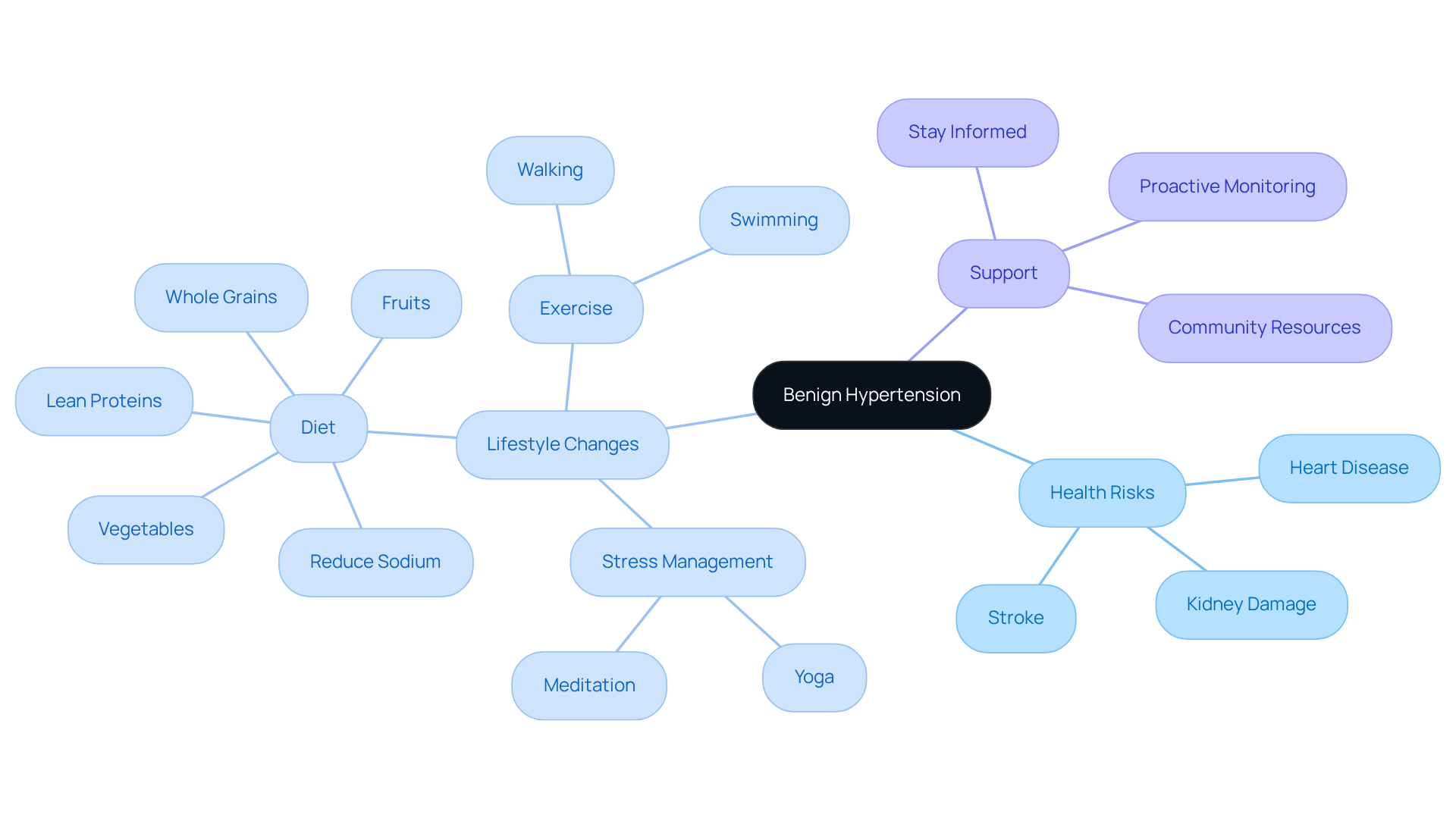
Many seniors are significantly concerned about , which is also referred to as benign hypertension, affecting nearly 50% of older adults. While it might not seem alarming at first, understanding what is important because prolonged elevated blood pressure can lead to , such as , stroke, and kidney damage. essential, as it can truly make a difference in your quality of life and help reduce health risks.
So, how can you effectively manage ? Lifestyle changes are key. Embracing a filled with:
while cutting back on sodium can be incredibly beneficial. Regular exercise, like walking or swimming, can also help ease arterial tension. And don’t forget about ! Techniques such as yoga and meditation can greatly enhance your overall .
If you’ve been diagnosed with , it’s essential to understand what benign hypertension is and keep a close eye on your blood pressure. By staying informed and proactive, you can maintain optimal and significantly lower the chances of complications. Remember, you’re not alone in this journey; support is available, and taking these steps can lead to a healthier, happier life.
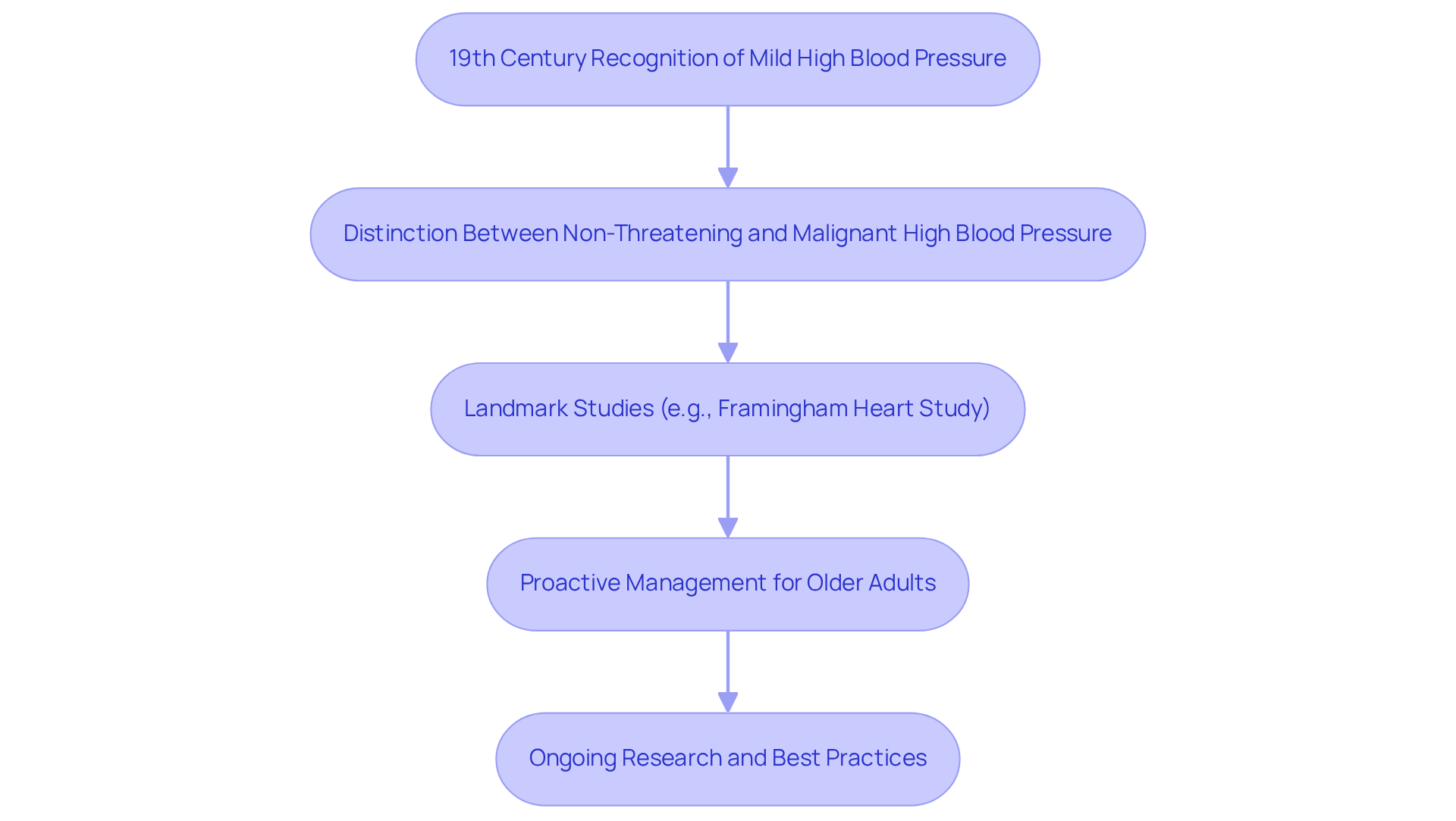
The understanding of mild has evolved significantly since it was first recognized in the 19th century as a stable condition requiring minimal intervention. Initially, medical literature often distinguished between non-threatening and malignant , with the former considered less alarming. However, landmark studies, like the Framingham Heart Study, have changed this perspective, showing that even can lead to serious .
This shift encourages a more , particularly for older adults who frequently experience . Have you ever wondered how this affects your health? As medical historians note, the evolution of our understanding of mild mirrors a broader trend in . It underscores the importance of recognizing and addressing all forms of to improve patient outcomes.
Ongoing research and continue to guide best practices, ensuring that even those with , specifically what is , receive the they deserve. Remember, you’re not alone in this journey. Seeking support and understanding can make a significant difference in managing your health.
? It often sneaks up on us, presenting with few or no symptoms. This silent condition can easily go unnoticed, which raises the question of , and it’s concerning to know that 37% of people mistakenly believe that high blood pressure always shows clear signs. This misunderstanding about can lead to underdiagnosis, leaving many unaware of their condition. While some may remain asymptomatic, others might experience mild symptoms like headaches, fatigue, or dizziness, along with subtle signs such as blurred vision or a pounding sensation in the chest or ears. These symptoms are usually not severe and can be attributed to other factors, which can lead to further misdiagnosis.
is crucial. Many individuals may not realize they have elevated readings until they are checked. According to the CDC, , and half of those affected are unaware of this fact. and its characteristics is vital for , particularly for older adults who may face a higher risk of complications from prolonged high blood pressure.
At Amavita Heart and Vascular Health, we prioritize the well-being of high-risk patients, including those with diabetes, high blood pressure, a family history of heart disease, and those seeking executive health screenings. We offer advanced imaging and comprehensive evaluations to ensure you receive the care you deserve. It’s important to recognize that for years, highlighting the need for proactive health measures. Under the guidance of Dr. Pedro Martinez-Clark, we emphasize the importance of cardiovascular health and early detection. Remember, you’re not alone in this journey; we’re here to support you every step of the way.

Benign hypertension, often seen as a mild form of high blood pressure, is more than just a number; it plays a crucial role in our cardiovascular health. While it might not seem dangerous at first glance, the long-term risks of unmanaged benign hypertension are significant and shouldn't be ignored. This condition calls for careful monitoring and proactive management to prevent it from escalating into more serious health issues.
Throughout this article, we've shared key insights about benign hypertension's characteristics, its historical context, and effective management strategies. Understanding how prevalent this condition is, especially among older adults, highlights the importance of regular blood pressure checks and lifestyle changes. Simple steps like adopting a heart-healthy diet and engaging in regular physical activity can make a world of difference. Moreover, the importance of medical intervention, including potential treatment options, cannot be overstated. Staying informed and vigilant about heart health is essential.
Recognizing benign hypertension as a significant health concern is vital for preventing complications such as heart disease and stroke. By prioritizing awareness and taking actionable steps towards management, you can greatly enhance your quality of life and reduce health risks. Embracing a proactive approach to heart health not only empowers you but also fosters a supportive community for those navigating this condition. Remember, you’re not alone in this journey, and seeking help is a strong and positive step forward.
What is benign hypertension?
Benign hypertension, also known as mild high blood pressure or essential high blood pressure, is a gradual and low-risk type of hypertension that usually does not lead to immediate organ damage. It is characterized by stable blood pressure levels that exceed normal but remain below those associated with severe hypertension.
How common is high blood pressure in the U.S.?
Nearly 48% of U.S. adults experienced high blood pressure from August 2021 to August 2023, with many individuals unaware of their condition.
What percentage of people over 50 are aware of their high blood pressure?
Only 56% of individuals over 50 are aware of their high blood pressure.
What risks are associated with unmanaged benign hypertension?
Unmanaged benign hypertension can lead to thicker, stiffer arteries, which increases the risk of serious health issues such as heart disease, stroke, and kidney failure.
What is the importance of managing benign hypertension?
Managing benign hypertension is crucial because, despite being labeled 'benign,' it can worsen over time and pose significant health risks if left untreated. Regular monitoring and lifestyle changes are essential for maintaining healthy blood pressure levels.
What treatments are commonly used for mild elevated blood pressure levels?
Common treatments for mild elevated blood pressure include diuretics, ACE inhibitors, and beta-blockers, which help manage circulation effectively.
How does Amavita Heart and Vascular Health assist high-risk patients?
Amavita Heart and Vascular Health offers advanced imaging capabilities and comprehensive evaluations to assess cardiovascular health accurately, allowing for tailored treatment plans that meet individual patient needs, especially for those with diabetes, high blood pressure, or a family history of heart disease.