


A bubble echocardiogram is more than just a specialized imaging technique; it’s a vital tool in uncovering hidden cardiovascular issues that standard tests might miss. This non-invasive procedure enhances the visualization of blood flow, allowing for the detection of right-to-left shunts, such as patent foramen ovale (PFO) and atrial septal defects (ASD). These conditions are crucial to identify, as they can help prevent severe complications like strokes.
But what happens if someone decides to skip this potentially life-saving test? It’s a question worth considering. Understanding the significance of a bubble echocardiogram could be the key to better heart health and avoiding serious consequences.
If you or a loved one have concerns about heart health, remember that you’re not alone. Seeking help can lead to better outcomes and peace of mind. Don’t hesitate to reach out for support; your heart deserves it.
A contrast ultrasound, often referred to as a contrast study, is a specialized imaging technique that significantly enhances our ability to see blood circulation within the heart. This non-invasive procedure involves injecting a small amount of saline mixed with air into a vein, creating tiny microbubbles. These bubbles travel to the heart, where they can be easily observed using ultrasound technology. This method is particularly effective at identifying right-to-left shunts, such as patent foramen ovale (PFO) or atrial septal defects (ASD), which might be missed during standard heart ultrasounds.
The importance of contrast ultrasound in detecting cardiovascular issues is truly remarkable, especially considering that 25% of individuals with heart failure depend on post-acute care centers. These insights are crucial for understanding the heart's structure and function, particularly for those experiencing unexplained strokes or other heart-related concerns. For instance, studies indicate that about 6% of transesophageal ultrasound exams include contrast assessments, highlighting their vital role in clinical practice. Recent findings also suggest that contrast heart ultrasound can reveal the presence of PFO in patients who might otherwise be misdiagnosed, guiding them toward appropriate treatment options.
Cardiologists emphasize the value of ultrasound tests, noting that they enhance the visualization of blood flow, which is essential for accurate diagnosis. Typically, the procedure takes about 30 to 45 minutes and is associated with very low risks, making it a safe choice for patients. In fact, the most common side effect reported is a mild headache. With the ability to , innovative ultrasound imaging is an invaluable tool in modern cardiovascular care, ensuring that patients receive timely and effective treatment while reducing the need for hospital readmissions.

In various clinical situations, especially when identifying right-to-left shunts that can lead to paradoxical embolism and unexplained strokes, one might wonder why do I need a bubble echocardiogram. Let’s explore some key reasons why these tests are so valuable:
Healthcare professionals stress the importance of these indications and explain why do I need a bubble echocardiogram, noting that timely use of contrast ultrasound can significantly improve outcomes for patients. For example, when unexplained strokes occur, identifying a PFO or ASD can lead to effective interventions that reduce future risks. Therefore, adhering to established protocols for ultrasound indications is crucial in clinical practice, ensuring that patients at Amavita receive the they deserve, including thorough health assessments and treatment oversight, all under the expert guidance of Dr. Martinez-Clark.

Understanding why do I need a is important, as not conducting a bubble ultrasound when needed can lead to serious risks. Have you ever considered why do I need a [bubble echocardiogram](https://droracle.ai/articles/339261/can-a-bubble-study-result-in-a-false-positive) to determine what might occur if conditions like patent foramen ovale (PFO) or atrial septal defects (ASD) remain undiagnosed? These issues can result in recurrent strokes or transient ischemic attacks (TIAs), which can be frightening.
Additionally, delaying treatment for those who might require surgical intervention or other therapies can have significant consequences. The risk of complications from undiagnosed shunts is real, potentially leading to systemic embolism. Moreover, unrecognized structural abnormalities can cause heart function to deteriorate over time.
It's worth noting that the complication rate for air-filled studies is about 0.1%. This statistic underscores the importance of informed consent and careful consideration of the procedure's risks. Cardiologists stress that undiagnosed PFOs or ASDs can lead to severe neurological events, highlighting why do I need a bubble echocardiogram to be aware of these risks.
By recognizing these dangers, both individuals and healthcare professionals can appreciate the vital role that ultrasound studies play in ensuring comprehensive cardiovascular care. Remember, seeking help and understanding your health is a step towards a healthier future.

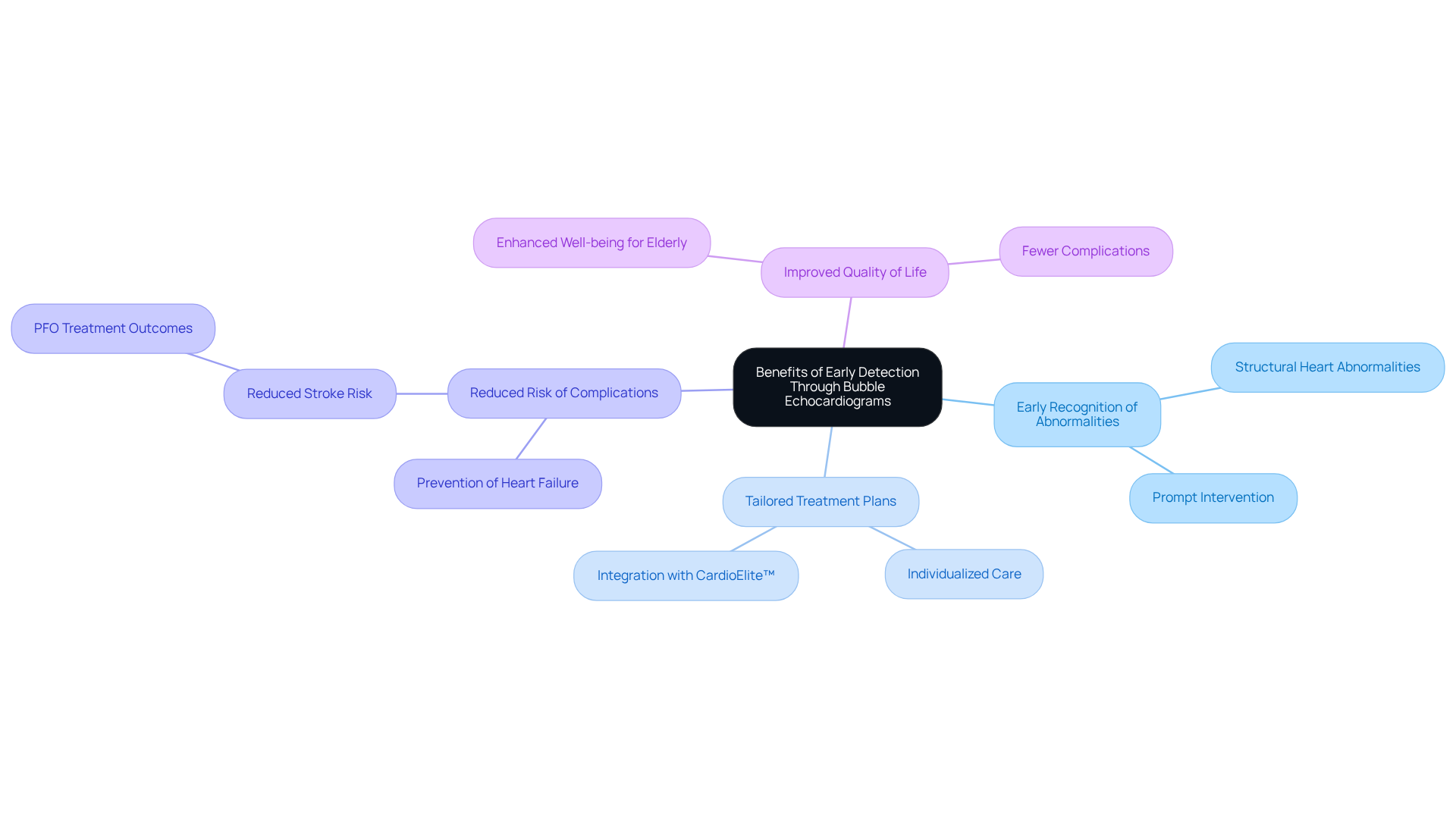
Early detection of cardiovascular issues through ultrasound heart imaging can truly make a difference in your health journey. Imagine being able to recognize structural heart abnormalities early on, allowing for swift intervention and management. This proactive approach can significantly reduce the risk of severe complications, such as strokes or heart failure, by addressing underlying problems before they escalate.
Moreover, tailored treatment plans can lead to improved outcomes, especially within the framework of Amavita's CardioElite™ program. This program is designed with your individual needs in mind, ensuring that you receive the care that suits you best. For many, particularly the elderly, this means an enhanced quality of life by preventing the progression of cardiovascular diseases.
Studies have shown that taking early action following contrast ultrasound examinations can greatly reduce stroke risk. For instance, individuals identified with a patent foramen ovale (PFO) via contrast ultrasound have experienced a notable reduction in stroke occurrences when treated promptly. Healthcare professionals emphasize that early detection is crucial in enhancing outcomes for individuals like you.
By prioritizing cardiac ultrasounds, you and your healthcare provider can ensure that any cardiovascular issues are addressed before they become more serious. This proactive approach can lead to improved health and well-being. Real-world examples show that individuals often wonder why do I need a bubble echocardiogram, as those who underwent early detection frequently report fewer complications and a smoother recovery process. This reinforces the value of this in modern cardiovascular care.
Furthermore, Amavita's CardioElite™ program enhances this process by integrating advanced imaging and comprehensive evaluations. This ensures that high-risk patients receive the targeted care they need, providing peace of mind and support every step of the way. Remember, taking action now can lead to a healthier tomorrow.
A bubble echocardiogram is a vital tool for assessing heart health, especially when it comes to spotting conditions that might be missed with standard imaging techniques. This specialized ultrasound method enhances the visualization of blood flow, making it easier to identify serious cardiovascular issues like right-to-left shunts, patent foramen ovale (PFO), and atrial septal defects (ASD). By offering clearer insights into heart structure and function, this non-invasive procedure plays a crucial role in guiding effective treatment and improving patient outcomes.
Have you ever wondered about the importance of bubble echocardiograms? They can detect potentially life-threatening conditions, evaluate unexplained strokes or transient ischemic attacks, and clarify abnormal findings from initial cardiac ultrasounds. The risks of skipping this important test are significant, including the possibility of recurrent strokes and systemic embolism. This highlights the need for timely intervention. Early detection through bubble echocardiograms can significantly reduce the likelihood of severe complications and allows for tailored treatment plans that enhance the quality of care.
In conclusion, the importance of bubble echocardiograms truly cannot be overstated. They provide essential diagnostic information that can lead to timely and effective treatment, contributing to better long-term health outcomes for patients. By prioritizing this valuable tool in cardiovascular care, you can take proactive steps toward safeguarding your heart health and reducing the risks associated with undiagnosed conditions. Embracing early detection and comprehensive evaluations is a vital strategy for achieving a healthier future. Remember, you are not alone in this journey; support is available, and taking these steps can make a significant difference in your well-being.
What is a Bubble Echocardiogram?
A Bubble Echocardiogram, or contrast ultrasound, is a specialized imaging technique that enhances the visualization of blood circulation within the heart by injecting a small amount of saline mixed with air into a vein to create tiny microbubbles.
How does a Bubble Echocardiogram work?
The microbubbles created by injecting saline and air travel to the heart, where they can be easily observed using ultrasound technology, allowing for better detection of cardiovascular issues.
What conditions can a Bubble Echocardiogram help identify?
It is particularly effective at identifying right-to-left shunts, such as patent foramen ovale (PFO) and atrial septal defects (ASD), which may be missed during standard heart ultrasounds.
Why is the Bubble Echocardiogram important in cardiovascular care?
It provides crucial insights into the heart's structure and function, especially for patients with unexplained strokes or heart-related concerns, and can guide them toward appropriate treatment options.
What is the typical duration and risk associated with a Bubble Echocardiogram?
The procedure typically takes about 30 to 45 minutes and is associated with very low risks, with the most common side effect being a mild headache.
How prevalent is the use of contrast assessments in ultrasound exams?
Studies indicate that about 6% of transesophageal ultrasound exams include contrast assessments, highlighting their vital role in clinical practice.
What are the benefits of using a Bubble Echocardiogram over traditional tests?
It enhances the visualization of blood flow, allowing for more accurate diagnoses and helping to detect issues that might be overlooked by traditional tests, thus reducing the need for hospital readmissions.